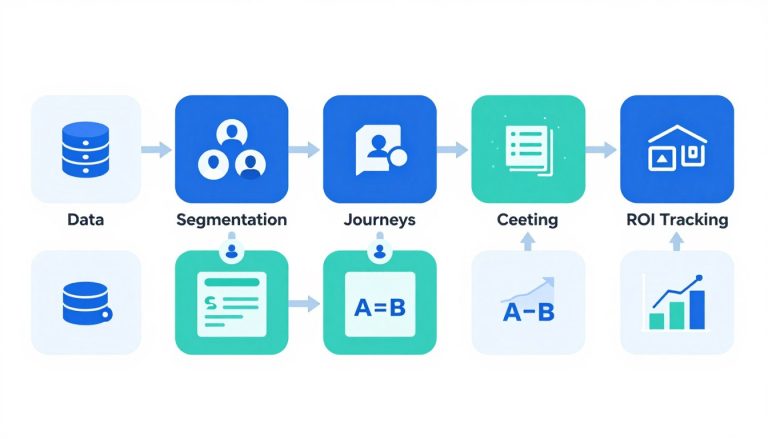
ConvertKit vs AWeber vs Klaviyo: Best Email Marketing Tools for AI Marketers

As AI transforms how we create and optimise email campaigns, platforms like ConvertKit, AWeber, and Klaviyo have evolved to meet these new demands. But which one delivers the best combination of AI capabilities, user experience, and value for your specific needs? This comprehensive comparison breaks down everything AI marketers need to know to make the right choice.
Why AI-Powered Email Marketing Tools Matter
Email marketing remains one of the highest-ROI channels available, with an average return of $36 for every $1 spent. But as inbox competition intensifies, AI capabilities have become essential for cutting through the noise. The best email marketing tools for AI marketers offer significant advantages:
- AI-generated content that saves hours of writing time while maintaining brand voice
- Predictive analytics that optimise send times for maximum open rates
- Intelligent segmentation that automatically groups subscribers based on behaviour patterns
- Personalised product recommendations driven by machine learning
- A/B testing automation that continuously improves campaign performance
For AI marketers specifically, the right platform needs to balance powerful automation with intuitive interfaces and seamless integration with other AI tools in your stack. Let’s examine how ConvertKit, AWeber, and Klaviyo measure up against these requirements.
ConvertKit vs AWeber vs Klaviyo: Overview
Before diving into specific features, here’s a quick snapshot of what makes each platform unique for AI marketers:
ConvertKit
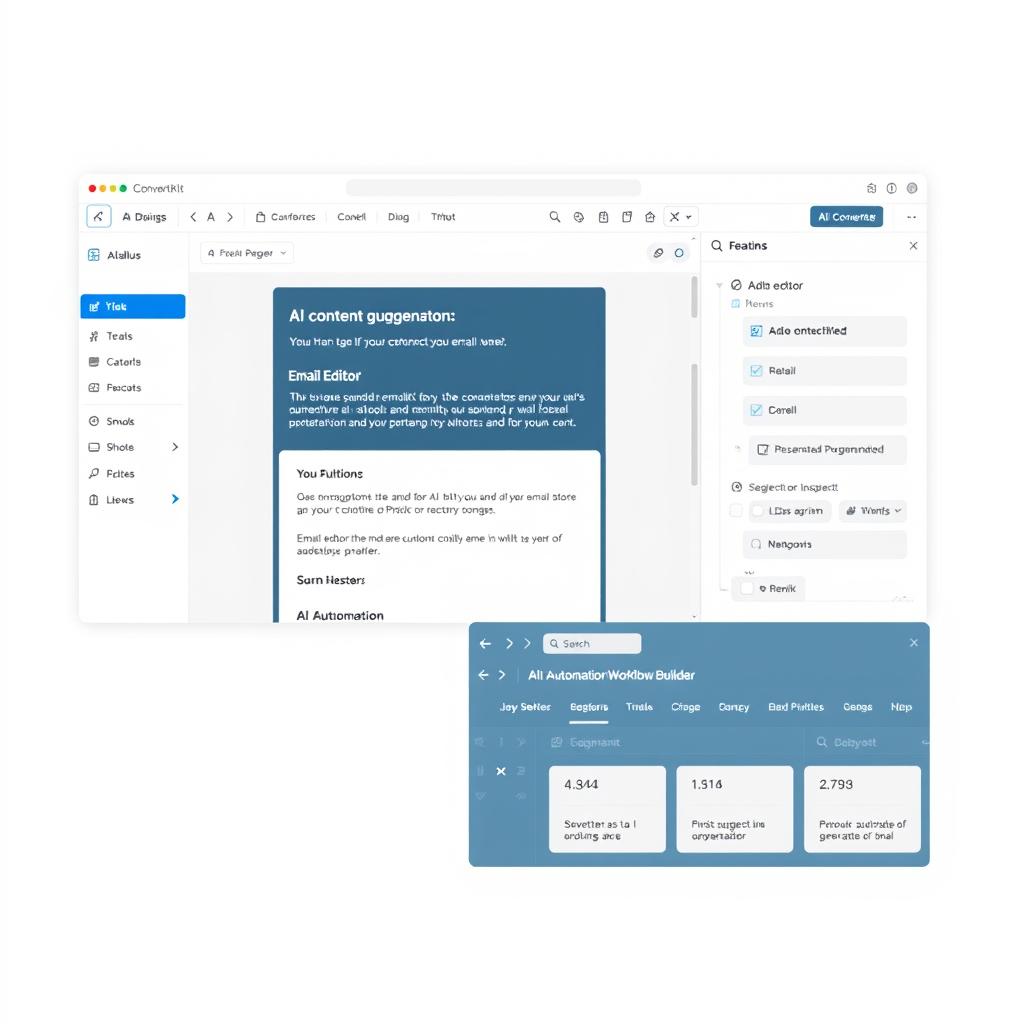
Initially built for creators, ConvertKit (now Kit) has evolved to incorporate AI tools that simplify email creation and automation. Its strength lies in its clean interface and focus on content creators using AI-generated materials.
AWeber
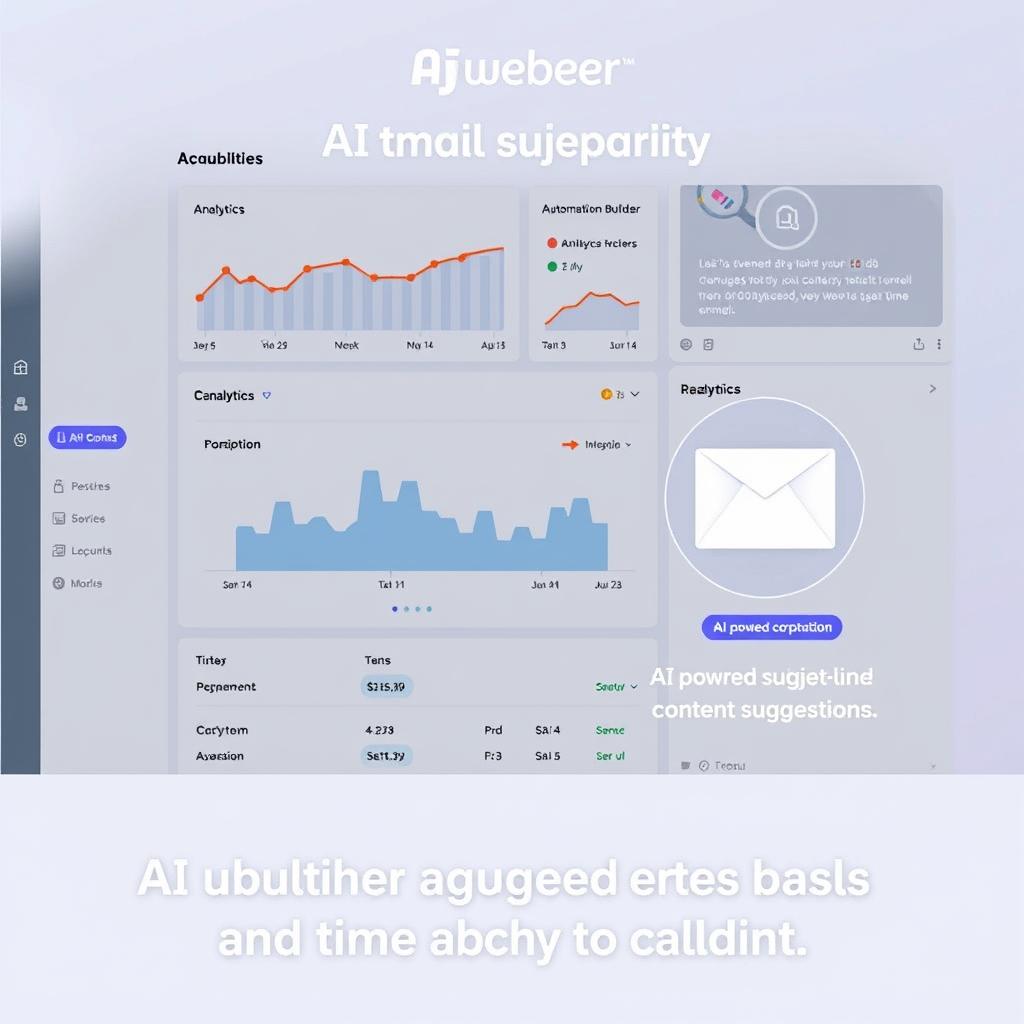
A veteran in the email marketing space, AWeber has integrated AI to enhance its reliable delivery infrastructure. It offers AI writing assistants and innovative automation tools while maintaining its reputation for excellent deliverability.
Klaviyo
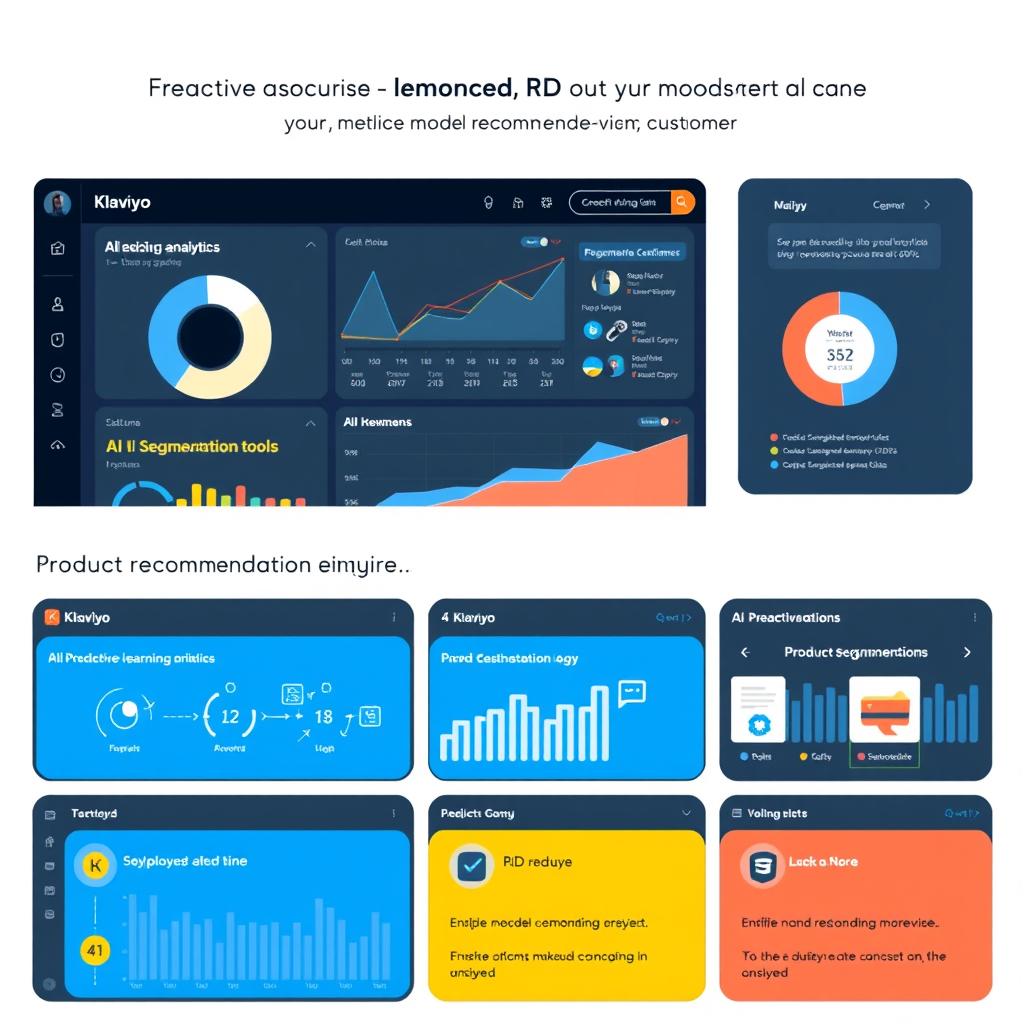
Klaviyo stands out for its powerful predictive analytics and e-commerce focus. Its AI capabilities excel at customer lifetime value prediction, product recommendations, and behaviour-based automation for online stores.
AI-Specific Features Comparison
The core value for AI marketers lies in how these platforms leverage artificial intelligence to improve campaign performance. Here’s how they compare across key AI capabilities:
AI Content Generation
ConvertKit
ConvertKit’s AI writing assistant helps generate email content, subject lines, and newsletter sections. While not as advanced as dedicated AI writing tools, it integrates well with the platform’s creator-focused workflow. The AI maintains a conversational tone that works well for relationship building.
AWeber
AWeber’s AI content creator offers robust capabilities for generating entire emails, subject lines, and call-to-action text. It excels at creating multiple variants for A/B testing and can adapt to different tones and styles. The platform also includes AI-powered design suggestions for email layouts.
Klaviyo
Klaviyo’s Email AI tool stands out for its ability to generate highly targeted content based on customer data. Its subject line assistant creates options optimised for engagement, while the content generator can create product-specific messaging that drives conversions.
Predictive Analytics
ConvertKit
ConvertKit offers basic predictive capabilities focused on subscriber engagement. It can identify potential churn and suggest re-engagement campaigns, but lacks the depth of ecommerce-specific predictions found in other platforms.
AWeber
AWeber provides send-time optimisation that analyses past engagement to determine when subscribers are most likely to open emails. Its predictive analytics also help identify which segments are most likely to convert, though e-commerce predictions are limited.
Klaviyo
This is where Klaviyo truly shines. Its predictive analytics include customer lifetime value modelling, churn risk assessment, and purchase prediction follow-up. The platform can forecast when customers will make repeat purchases and recommend products they’re likely to buy next.
AI-Powered Segmentation
ConvertKit
ConvertKit offers behaviour-based segmentation that automatically groups subscribers based on their interactions. While it doesn’t explicitly use “AI” terminology, its smart segments effectively leverage machine learning to identify patterns in subscriber behaviour.
AWeber
AWeber’s segmentation tools use engagement data to create subscriber groups automatically. The platform can identify high-value subscribers and segment based on predicted interests, though it lacks the advanced behavioural segmentation of specialised platforms.
Klaviyo
Klaviyo’s Segments AI can build complex segments based on natural language instructions. Describe the audience you want to target, and the AI creates the appropriate segment. It can also identify patterns in purchase behaviour to create predictive segments like “likely to purchase in the next 7 days.”
Automation Workflows for AI Marketers
Effective automation is critical for AI marketers looking to scale their campaigns while maintaining personalisation. Here’s how these platforms handle automated workflows:
ConvertKit’s Automation
ConvertKit offers a visual automation builder that’s intuitive and straightforward. For AI marketers, its strength lies in the simplicity of creating content-driven sequences that can incorporate AI-generated materials. The platform excels at:
- Tag-based automation that triggers based on subscriber behavior
- Visual workflow builder with drag-and-drop simplicity
- Integration with AI writing tools for content generation
- Automated A/B testing for subject lines
Try ConvertKit’s Visual Automation Builder
Experience how ConvertKit’s intuitive automation tools can streamline your AI marketing workflows.
AWeber’s Automation
AWeber combines simplicity with power in its automation capabilities. The platform offers:
- Campaign automation based on subscriber actions and tags
- AI-suggested workflow templates for common marketing scenarios
- Automated behavioural tagging that learns from subscriber patterns
- Brilliant timing that adjusts send schedules based on engagement data
Explore AWeber’s Smart Automation
See how AWeber’s intelligent automation tools can help you create more effective email sequences.
Klaviyo’s Automation
Klaviyo offers the most sophisticated automation capabilities of the three, particularly for e-commerce businesses. Its “Flows” feature includes:
- Flows AI that builds entire automation sequences based on natural language instructions
- Predictive sending that determines the optimal time to send to each recipient
- Dynamic content blocks that change based on customer data and behaviour
- Branching logic that creates personalised paths based on AI predictions
- Automated product recommendations that update based on inventory and customer behaviour
Discover Klaviyo’s Advanced AI Automation
See why Klaviyo’s predictive flows are the choice of sophisticated AI marketers.
Integration with AI Tools
For AI marketers, the ability to connect email platforms with other AI tools is crucial. Here’s how these platforms handle external AI integrations:
ConvertKit’s AI Integrations
ConvertKit offers solid integration options for AI marketers, including:
- Zapier integration for connecting with AI tools like ChatGPT and Jasper
- API access for custom AI workflow development
- WordPress integration for AI-generated blog content to email workflows
- Native integration with several content creation platforms
AWeber’s AI Integrations
AWeber provides extensive integration capabilities:
- Direct integration with Zapier for connecting to 3,000+ apps, including AI tools
- Robust API for custom AI workflow development
- WordPress plugin for content-to-email automation
- Landing page integrations for capturing leads from AI-generated content
Klaviyo’s AI Integrations
Klaviyo excels at ecommerce integrations but also offers strong AI connectivity:
- Deep ecommerce integrations with Shopify, WooCommerce, and Magento
- Open API for custom AI implementation
- Native integration with Facebook’s AI-powered advertising platform
- Zapier support for connecting with AI content tools
- Data science integrations for advanced predictive modelling
Pricing and Scalability for AI Marketers
Cost considerations are important when selecting an email platform, especially when AI features often come at a premium. Here’s how these platforms compare on pricing and scalability:
| Feature | ConvertKit | AWeber | Klaviyo |
| Free Plan | Up to 1,000 subscribers, limited features | Up to 500 subscribers, full features | Up to 250 contacts, 500 emails/month |
| Starting Paid Plan | $25/mo (1,000 subscribers) | $19.99/mo (500 subscribers) | $20/mo (500 contacts) |
| AI Features Included | Basic AI writing (paid plans) | AI content creation, send time optimization | Subject line AI (free), Email AI, Segments AI, Flows AI (paid) |
| Mid-tier Plan (5K subscribers) | $83/mo | $49.99/mo | $100/mo |
| Enterprise Options | Custom pricing, dedicated support | Pro plan with advanced features | Custom pricing, dedicated support |
Scalability Considerations
When evaluating these platforms for AI marketing at scale, consider these factors:
ConvertKit Scalability
ConvertKit’s pricing scales linearly with subscriber count, which can become expensive for larger lists. However, its focus on creators means it handles content-heavy workflows efficiently. The platform maintains good performance even with complex automation sequences.
AWeber Scalability
AWeber offers more favourable pricing at scale compared to ConvertKit. Its infrastructure is built to handle high-volume sending with excellent deliverability. The platform maintains consistent performance as your list grows, though some advanced AI features may require higher-tier plans.
Klaviyo Scalability
Klaviyo’s pricing is the steepest of the three at higher subscriber counts, but its advanced AI capabilities can generate ROI that justifies the cost. The platform is built to scale with sophisticated e-commerce operations and can handle complex data processing for predictive analytics.
User Interface and AI Customisation
The ease of implementing AI features varies significantly across these platforms. Here’s how they compare on user experience and AI customisation:
ConvertKit’s User Experience
ConvertKit offers a clean, minimalist interface that prioritises simplicity:
Pros
- Intuitive, distraction-free email editor
- Simple visual automation builder
- Easy access to AI writing tools
Cons
- Limited advanced AI customisation options
- Fewer data visualisation tools for AI insights
- Less granular control over AI-generated content
AWeber’s User Experience
AWeber balances functionality with accessibility:
Pros
- Straightforward AI content generation tools
- Intuitive campaign builder with AI assistance
- Clean analytics dashboard for performance tracking
Cons
- Interface can feel dated compared to newer platforms
- Some AI features require navigating multiple menus
- Limited customisation for AI prediction models
Klaviyo’s User Experience
Klaviyo offers the most sophisticated interface with deeper AI capabilities:
Pros
- Comprehensive AI customisation options
- Powerful data visualisation for predictive insights
- Natural language interfaces for AI features
Cons
- Steeper learning curve for new users
- The interface can feel overwhelming with many options
- Some advanced AI features require technical knowledge
Complete Feature Comparison for AI Marketers
This comprehensive comparison table highlights the key differences in AI capabilities across all three platforms:
| AI Feature | ConvertKit | AWeber | Klaviyo |
| AI Content Generation | Basic ⭐⭐⭐ | Strong ⭐⭐⭐⭐ | Advanced ⭐⭐⭐⭐⭐ |
| Predictive Analytics | Limited ⭐⭐ | Moderate ⭐⭐⭐ | Extensive ⭐⭐⭐⭐⭐ |
| Smart Segmentation | Good ⭐⭐⭐ | Good ⭐⭐⭐ | Excellent ⭐⭐⭐⭐⭐ |
| Send Time Optimization | Basic ⭐⭐ | Advanced ⭐⭐⭐⭐ | Advanced ⭐⭐⭐⭐⭐ |
| Product Recommendations | Not Available ❌ | Basic ⭐⭐ | Advanced ⭐⭐⭐⭐⭐ |
| A/B Testing Automation | Limited ⭐⭐ | Good ⭐⭐⭐ | Excellent ⭐⭐⭐⭐⭐ |
| Natural Language Interfaces | Limited ⭐ | Moderate ⭐⭐⭐ | Advanced ⭐⭐⭐⭐⭐ |
| Integration with AI Tools | Good ⭐⭐⭐ | Very Good ⭐⭐⭐⭐ | Excellent ⭐⭐⭐⭐⭐ |
| AI Workflow Templates | Few ⭐⭐ | Many ⭐⭐⭐⭐ | Extensive ⭐⭐⭐⭐⭐ |
Best Email Marketing Tools for Different AI Marketers
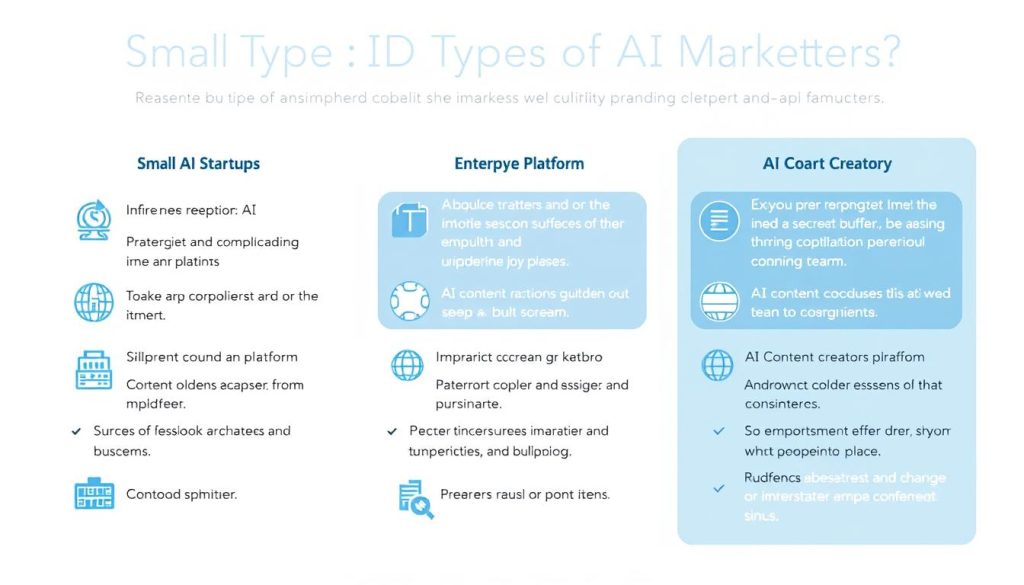
Based on our comprehensive analysis, here are our recommendations for different types of AI marketers:
Best for Small AI Startups
AWeber
AWeber offers the best balance of AI capabilities and affordability for small AI startups. Its straightforward interface, solid AI content tools, and reasonable pricing make it ideal for teams just beginning to leverage AI in their email marketing.
- Affordable pricing that scales reasonably with growth
- Strong AI content generation without overwhelming complexity
- Good deliverability to ensure your AI-crafted messages reach inboxes
- Solid integration options for connecting with other AI tools
Best for Enterprise-Level AI Marketing Teams
Klaviyo
For enterprise-level AI marketing operations, Klaviyo’s sophisticated predictive capabilities and deep customisation options make it the clear choice. While it comes at a higher price point, the advanced AI features can deliver significant ROI for larger operations.
- Industry-leading predictive analytics for customer behaviour
- Advanced segmentation using natural language processing
- Powerful automation builder with AI-assisted workflow creation
- Robust API and integration options for custom AI implementations
- Sophisticated reporting that connects email performance to revenue
Best for Creators Using AI-Generated Content
ConvertKit
Content creators leveraging AI tools will find ConvertKit (Kit) most aligned with their workflow. Its creator-centric approach makes it ideal for those using AI to generate newsletters, courses, and other content-heavy campaigns.
- Clean, distraction-free interface that puts content first
- Strong support for text-based emails that showcase AI-written content
- Excellent subscriber management for audience building
- Built-in monetisation tools for selling AI-created digital products
- Solid integration with content creation platforms
Choosing the Best Email Marketing Tool for Your AI Strategy
Selecting the right email marketing platform for AI-driven campaigns requires balancing several factors. Here’s our actionable advice for making your decision:
Define Your AI Marketing Priorities
Start by identifying which AI capabilities matter most for your specific goals:
- Content creation focus: If you primarily need help generating email content, AWeber offers the best balance of AI writing tools and value.
- Data-driven decisions: For predictive analytics and customer insights, Klaviyo’s advanced AI capabilities are unmatched.
- Creator economy: If you’re building an audience around AI-generated content, ConvertKit’s creator-centric approach will serve you best.
Consider Your Technical Resources
Your team’s technical capabilities should influence your choice:
- Limited technical resources: ConvertKit and AWeber offer more accessible interfaces with less technical overhead.
- Data science capabilities: If you have team members who can leverage advanced analytics, Klaviyo’s deeper AI features will provide more value.
- Integration needs: All three platforms offer API access, but AWeber and Klaviyo provide more extensive integration options for custom AI workflows.
Align with Your Growth Trajectory
Choose a platform that can scale with your AI marketing ambitions:
- Early-stage startups: AWeber offers the most accessible entry point with room to grow.
- Scaling businesses: Klaviyo provides the most sophisticated tools for leveraging AI as you scale, particularly for e-commerce.
- Content creators: ConvertKit grows with your audience while maintaining its creator-friendly approach.
The best email marketing tool for AI marketers is ultimately the one that aligns with your specific needs, technical capabilities, and growth plans. All three platforms offer free trials, so we recommend testing each one with your actual workflows before making a final decision.
Start Leveraging AI in Your Email Marketing Today
Take advantage of free trials to experience how these platforms can transform your AI marketing efforts.
Frequently Asked Questions About AI Email Marketing Tools
What makes an email marketing tool “AI-powered”?
An AI-powered email marketing tool incorporates artificial intelligence to automate and optimize various aspects of email campaigns. This typically includes features like content generation (writing subject lines and email copy), predictive analytics (determining optimal send times and forecasting customer behaviour), smart segmentation (automatically grouping subscribers based on behaviour patterns), and personalisation at scale (dynamically changing content based on individual preferences).
Do I need technical knowledge to use AI features in these platforms?
The basic AI features in ConvertKit, AWeber, and Klaviyo are designed to be accessible without technical expertise. You can generate content, optimise send times, and create segments using intuitive interfaces. However, more advanced customisation, particularly in Klaviyo, may require some technical knowledge. For deep integration with external AI tools or custom implementations, familiarity with APIs and data structures would be beneficial.
Can these platforms integrate with custom AI models I’ve developed?
Yes, all three platforms offer API access that allows integration with custom AI models. Klaviyo provides the most robust options for custom integrations, followed by AWeber and then ConvertKit. Suppose you’ve developed proprietary AI models for content generation, customer prediction, or other marketing functions. In that case, you can connect these to your email platform through their respective APIs or through middleware like Zapier.
How accurate are the AI predictions in these email marketing tools?
Prediction accuracy varies by platform and depends on the quality and quantity of your data. Klaviyo generally offers the most sophisticated predictive models, with documented accuracy improvements for send time optimisation and customer behaviour forecasting. All platforms improve their predictions over time as they gather more data about your specific audience. For best results, you’ll want at least 3-6 months of consistent sending history and subscriber interaction data.