Content Strategy with AI: How to Plan and Execute in 2025

The Evolution of AI in Content Strategy
In just a few years, we’ve witnessed a remarkable transformation in how AI supports content strategy. What began as simple grammar checkers and keyword suggestion tools has evolved into sophisticated systems capable of generating entire content plans, creating high-quality drafts, and providing deep analytical insights.
According to recent industry research, 87% of leading marketing teams now incorporate some form of AI in their content workflows, with 42% reporting significant improvements in productivity and content performance. The question is no longer whether to use AI, but how to implement it strategically to maximize results while maintaining brand authenticity.
“The most successful content teams in 2025 aren’t replacing humans with AI—they’re creating powerful human-AI partnerships that leverage the strengths of both.”
AI-Powered Content Planning: From Data to Strategy
The foundation of any effective content strategy lies in thorough planning. AI tools have revolutionised this process by analysing vast amounts of data to uncover insights that would be impossible to identify manually.
Audience Analysis and Segmentation
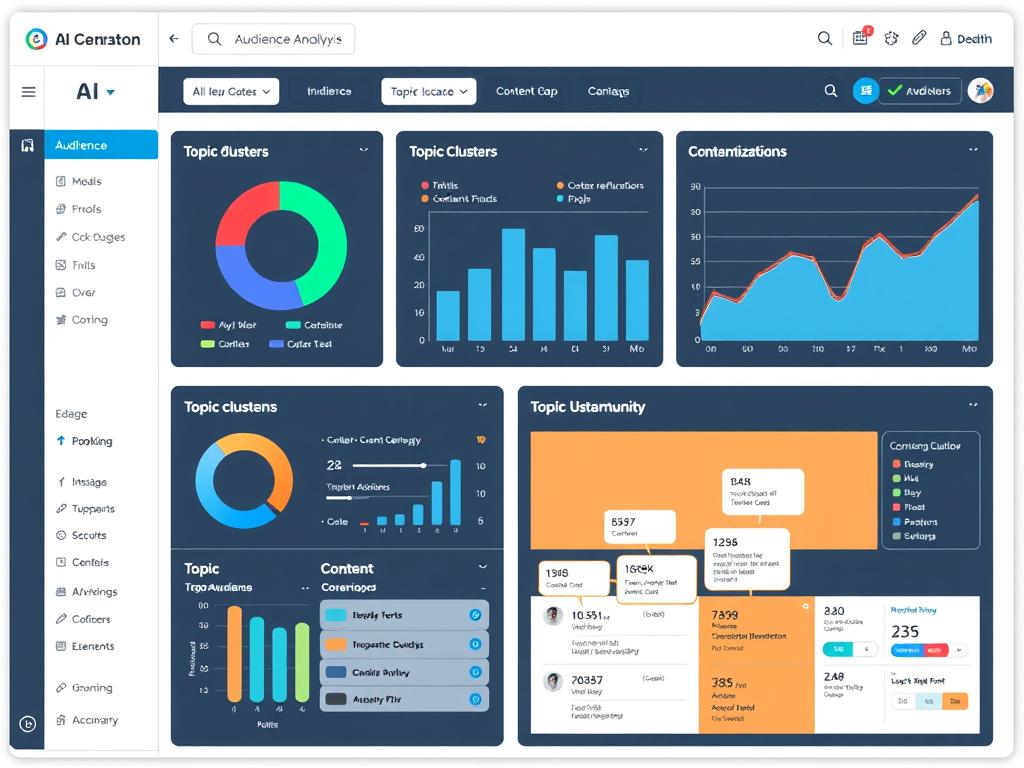
AI excels at identifying patterns in audience behaviour that can inform your content strategy. Modern AI tools can analyse:
- Search patterns and intent signals across platforms
- Content consumption habits and engagement metrics
- Demographic and psychographic data points
- Cross-channel interaction patterns
- Voice of customer data from reviews, surveys, and social media
These insights enable much more precise audience segmentation, allowing you to create targeted content that addresses specific needs at each stage of the customer journey.
Topic Identification and Content Gap Analysis
AI tools can now analyse your existing content alongside competitor content, search trends, and audience questions to identify:
Strategic Topic Opportunities
- Emerging trends before they peak
- Underserved topics with high audience interest
- Questions your audience is asking, but you haven’t answered
- Content themes that align with purchase intent
Content Gaps and Weaknesses
- Topics where competitors outrank you
- Content that’s underperforming or outdated
- Missing steps in your audience’s information journey
- Formats and channels you’re underutilising
Ready to uncover your content gaps?
Try our AI-powered content audit tool to identify your most significant content opportunities in minutes, not days.
AI-Generated Content Calendars
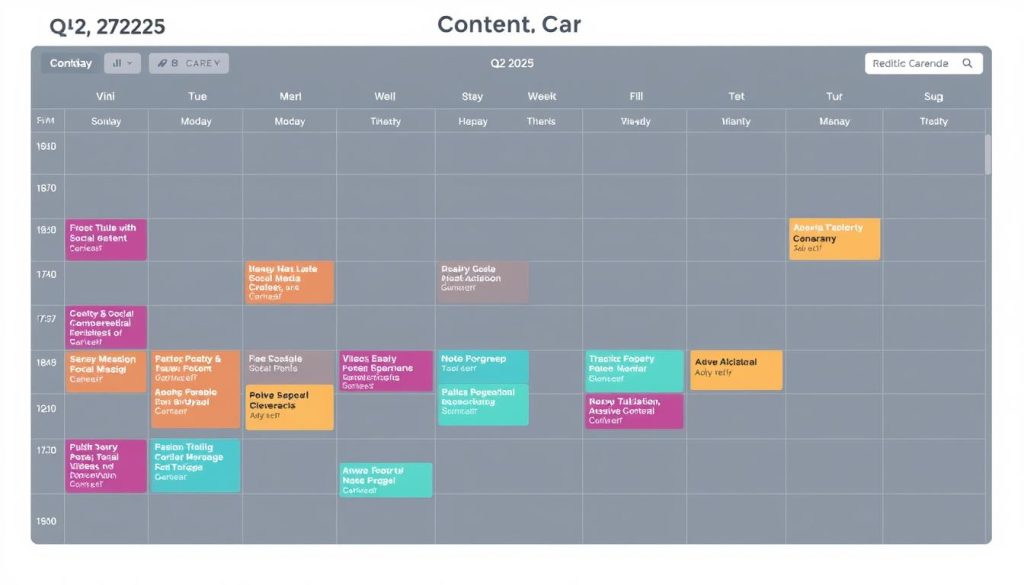
Once you’ve identified strategic topics, AI can help organise them into a cohesive content calendar that balances different content types, topics, and business objectives. Advanced AI planning tools can:
- Suggest optimal publishing cadences based on audience engagement patterns
- Recommend content mixes that balance educational, promotional, and entertaining content
- Align content with seasonal trends and business initiatives
- Identify strategic content clusters that build topical authority
Content Creation with AI: Best Practices for 2025
Content creation is where most marketers first experience AI, but the technology has evolved far beyond simple text generation. Today’s AI content creation tools offer sophisticated capabilities that, when used properly, can dramatically enhance both efficiency and quality.
Maintaining Brand Voice with AI
One of the biggest concerns with AI-generated content is maintaining a consistent brand voice. Fortunately, modern AI tools have become much more adept at capturing and preserving brand identity:
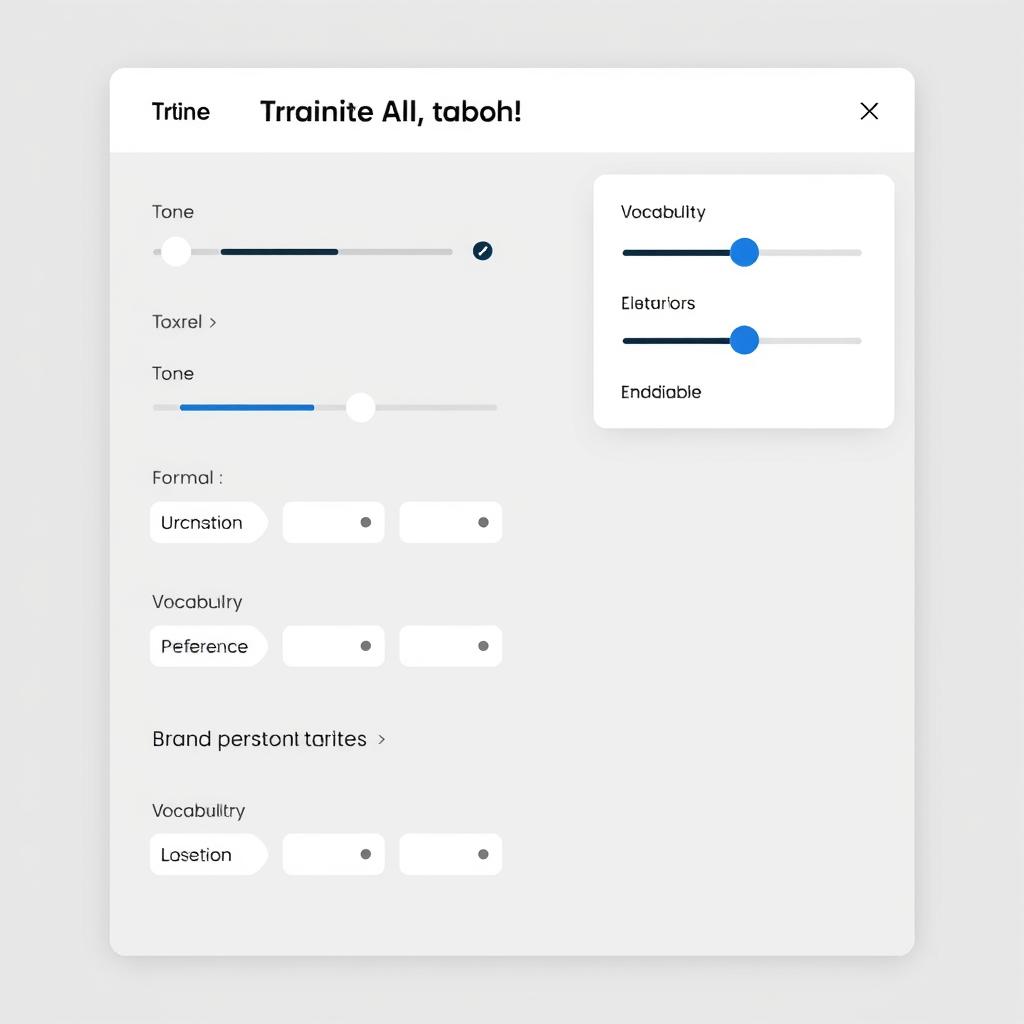
Brand Voice Training
Leading AI platforms now allow you to train the system on your existing content, style guides, and brand documentation. This creates a custom language model that understands your unique voice.
Voice Consistency Checks
AI tools can analyse draft content against your established voice parameters and highlight inconsistencies in tone, terminology, or messaging.
Contextual Adaptation
Advanced AI can adjust your brand voice based on channel, audience segment, or content purpose while maintaining core brand attributes.
Multimodal Content Creation
Content strategy in 2025 extends far beyond text. Today’s AI tools excel at creating various content formats:
Visual Content
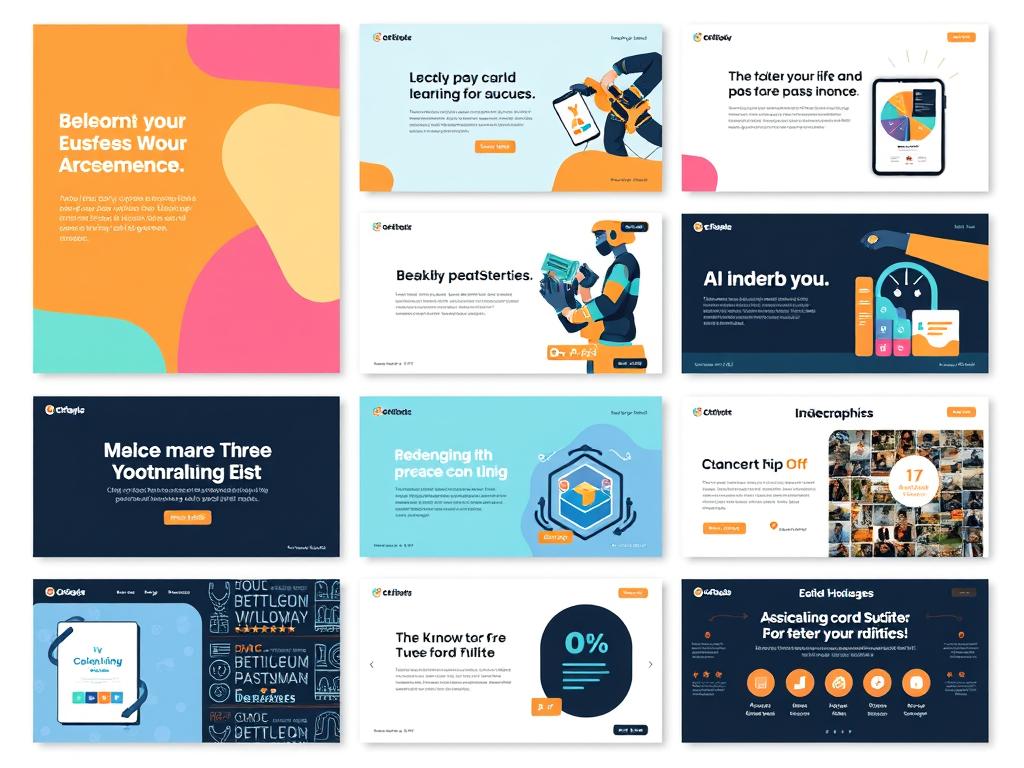
AI image generators have evolved to create on-brand visuals that maintain consistent style, colour schemes, and design elements across all content.
Video Content
AI video tools can now transform text briefs into storyboards, generate B-roll footage, create animations, and even produce draft videos with synchronized voiceovers.

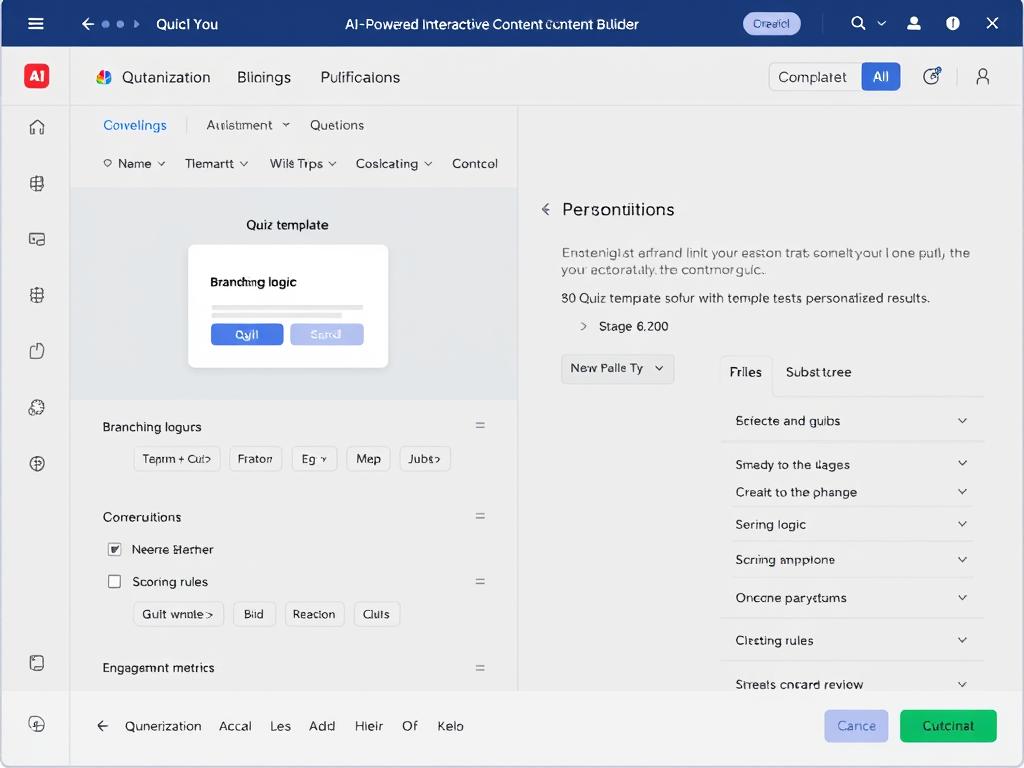
Interactive Content
AI can help design and populate interactive content like quizzes, assessments, calculators, and personalised recommendation engines.
Human-AI Collaboration Framework
The most effective content teams in 2025 follow a structured approach to human-AI collaboration:
- Strategic Direction (Human-Led): Humans define objectives, audience, key messages, and desired outcomes
- Research & Analysis (AI-Assisted): AI gathers data, analyses competitors, and identifies relevant insights
- Content Planning (Collaborative): Humans and AI work together to develop outlines and approaches
- Initial Draft Creation (AI-Led): AI generates first drafts based on approved outlines
- Refinement & Editing (Human-Led): Humans review, edit, and enhance AI-generated content
- Enhancement & Optimisation (AI-Assisted): AI suggests improvements for readability, SEO, and engagement
- Final Approval (Human): Humans provide final review and approval
Pro Tip: The most successful content teams don’t ask AI to create entire pieces from scratch. Instead, they provide detailed briefs with specific sections, key points, and examples to guide the AI toward producing more relevant, accurate drafts that require less editing.
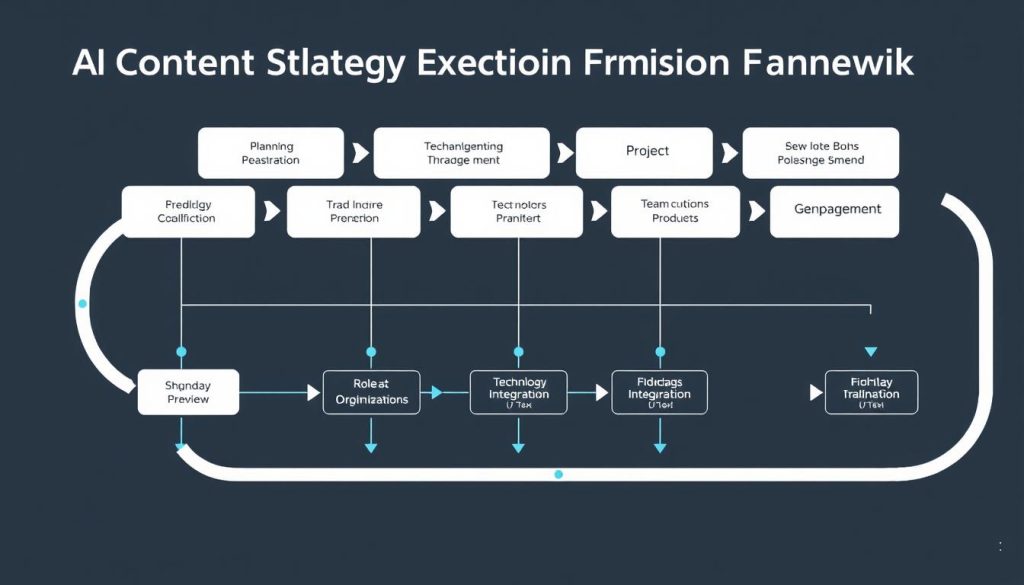
AI Content Strategy Execution Framework
Implementing an AI-driven content strategy requires a structured approach that integrates technology with human expertise. Here’s a comprehensive framework for execution:
Team Structure and Roles
An effective AI content strategy requires rethinking traditional team structures. The most successful organisations in 2025 have adopted these key roles:
| Role | Primary Responsibilities | AI Interaction Level |
| Content Strategist | Develops overall content direction, audience strategy, and performance goals | Medium – Uses AI for research and planning |
| AI Content Engineer | Manages AI tools, creates prompts, trains models, and ensures quality output | High – Primary interface with AI systems |
| Content Editor/Enhancer | Reviews, refines, and enhances AI-generated content | Medium – Collaborates with AI on drafts |
| Subject Matter Expert | Provides specialised knowledge and validates technical accuracy | Low – Reviews AI content for accuracy |
| Content Distribution Specialist | Manages cross-channel distribution and promotion | Medium – Uses AI for channel optimisation |
| Analytics & Optimisation Lead | Tracks performance and implements improvements | High – Leverages AI for deep analysis |
Technology Stack Recommendations
Building an effective AI content technology stack requires integrating several specialised tools:
Planning & Research
- MarketMuse for content intelligence
- Semrush for competitive analysis
- BrightEdge for content opportunity analysis
- Crayon for market intelligence
Content Creation
- Jasper for AI writing and ideation
- Midjourney for visual content creation
- Descript for video and audio content
- Grammarly Business for editing
Distribution & Analytics
- HubSpot for content management
- Buffer for social scheduling
- Google Analytics 4 for performance tracking
- Optimizely for content testing
Build your AI content tech stack
Get our free AI Content Technology Stack Blueprint with integration guides and workflow templates.
Implementation Timeline
Implementing a comprehensive AI content strategy typically follows this timeline:
- Month 1: Assessment & Planning – Audit existing content, identify opportunities, select initial tools
- Month 2: Tool Implementation & Training – Set up core AI tools, train team members, develop workflows
- Month 3: Pilot Projects – Test AI-assisted content creation on limited projects, refine processes
- Month 4-5: Scaled Implementation – Expand AI usage across content types and channels
- Month 6: Optimisation – Analyse results, refine processes, and expand technology stack
Measuring and Optimising AI-Driven Content
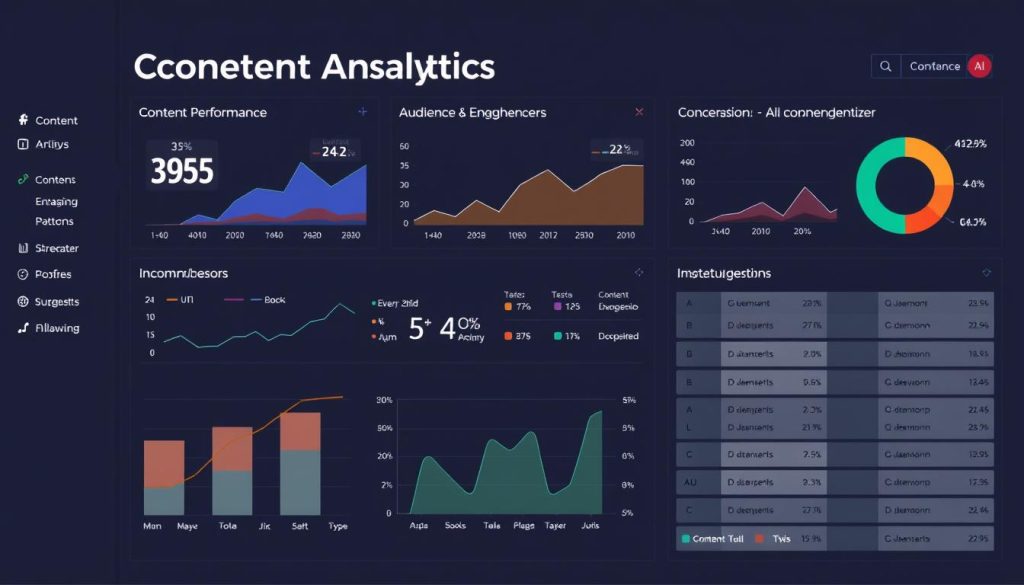
The true power of AI in content strategy becomes apparent in measurement and optimisation. AI analytics tools can process vast amounts of performance data to identify patterns and opportunities that would be impossible to spot manually.
Key Performance Indicators for AI Content
When measuring AI-assisted content, consider these metrics:
Content Performance Metrics
- Organic traffic and rankings
- Engagement metrics (time on page, scroll depth)
- Social shares and amplification
- Conversion rates by content piece
- Content velocity and production efficiency
AI-Specific Metrics
- Human editing time required
- AI accuracy rate
- Brand voice consistency score
- Content production cost savings
- Time-to-publish improvements
AI-Powered Content Optimisation
Modern AI tools can automatically identify optimisation opportunities:
- Content Refreshing – AI identifies underperforming content and suggests specific updates
- A/B Testing – AI generates multiple variants and tracks performance differences
- Personalisation – AI tailors content elements based on user behaviour and preferences
- Cross-linking – AI identifies internal linking opportunities to strengthen content clusters
- Format Optimisation – AI suggests optimal content formats based on performance data
Case Study: A B2B software company implemented AI-driven content optimisation and saw a 43% increase in organic traffic and a 27% improvement in lead quality within three months. Their approach focused on using AI to identify content gaps, refresh underperforming assets, and personalise content based on industry vertical.
Ethical Considerations for AI Content Strategy
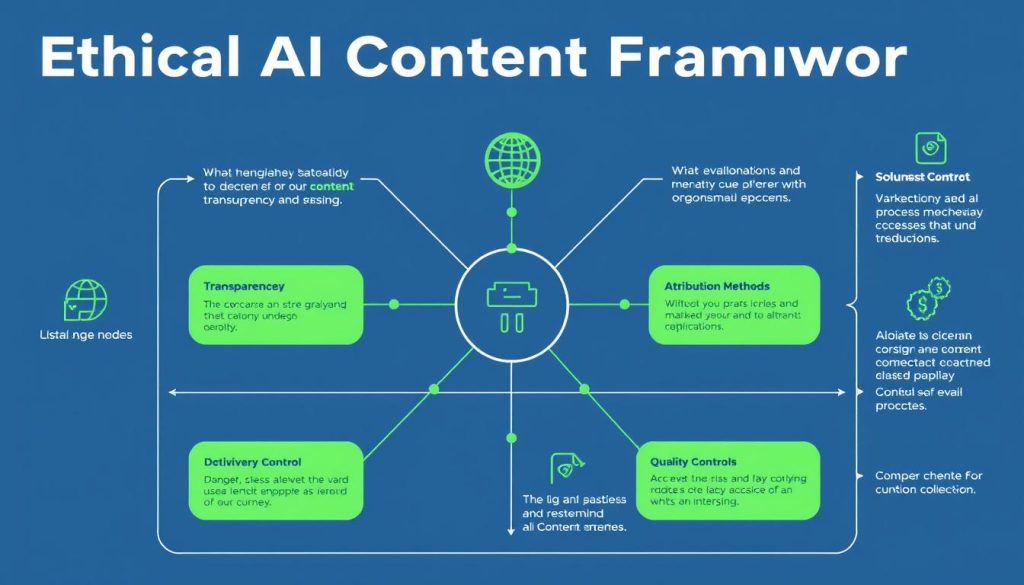
As AI becomes more deeply integrated into content strategy, ethical considerations become increasingly important. Organisations must develop clear guidelines and practices to ensure responsible AI usage.
Transparency and Attribution
Leading organisations are adopting these transparency practices:
- Developing clear AI disclosure policies for different content types
- Implementing appropriate attribution for AI-assisted content
- Creating internal documentation of AI usage in content workflows
- Establishing guidelines for when human expertise must be prioritised
Quality Control and Fact-Checking
To address concerns about AI accuracy and hallucinations:
Recommended Practices
- Implement systematic fact-checking processes for all AI content
- Use specialised AI tools designed to detect potential inaccuracies
- Maintain human review for sensitive or technical content
- Create feedback loops to improve AI accuracy over time
Practices to Avoid
- Publishing AI content without human review
- Using AI for sensitive topics without expert validation
- Relying on AI for legal, medical, or financial advice
- Failing to disclose AI usage when appropriate
Maintaining Human Oversight
Effective AI content strategies maintain appropriate human oversight through:
- Clear approval workflows with designated human reviewers
- Defined escalation paths for complex or sensitive content
- Regular audits of AI-generated content quality and accuracy
- Ongoing training for team members on effective AI collaboration
Future Trends: AI Content Strategy Beyond 2025
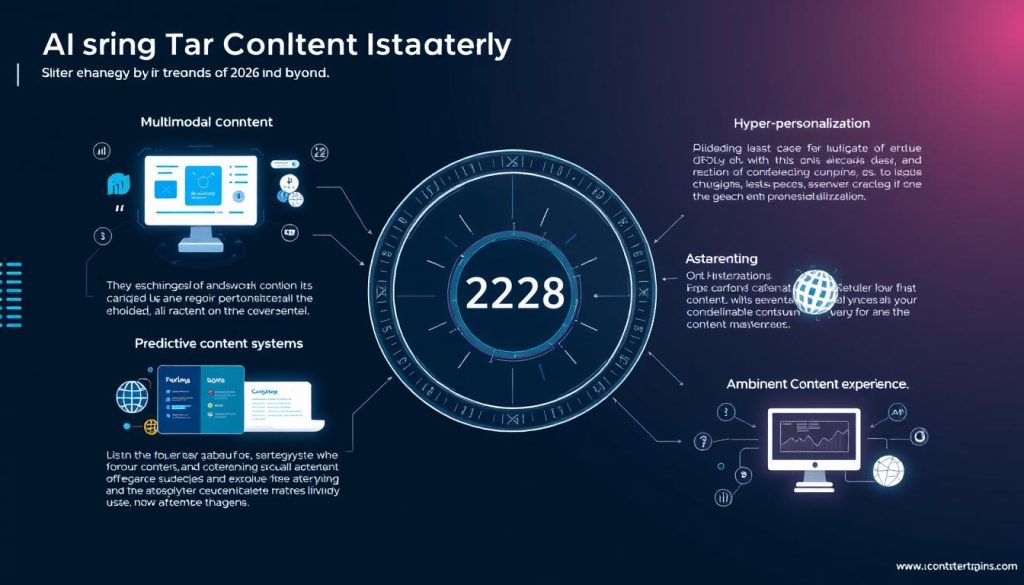
The evolution of AI in content strategy continues to accelerate. Here are the emerging trends that will shape the landscape beyond 2025:
Multimodal Content Creation
AI systems will seamlessly create integrated content experiences across text, image, video, and interactive elements from a single brief. This will enable truly cohesive cross-channel campaigns with consistent messaging and visuals.
Hyper-Personalization
AI will enable real-time content personalisation based on individual user behaviour, preferences, and context. Content will dynamically adapt not just to audience segments but to particular users at specific moments in their journey.
Predictive Content Systems
AI will move beyond reactive analytics to predictive systems that anticipate content needs before they emerge. These systems will automatically identify emerging topics and generate relevant content proposals.
Ambient Content Experiences
AI will enable content to adapt seamlessly across devices and contexts, creating ambient experiences that follow users across touchpoints while respecting privacy preferences.
Autonomous Content Optimisation
AI systems will continuously test, learn, and optimise content without human intervention, making thousands of micro-adjustments to improve performance in real-time.
Collaborative Intelligence
Advanced AI will function more as a true collaborator than a tool, offering strategic insights, challenging assumptions, and proposing innovative approaches to content challenges.
Conclusion: Building Your AI Content Strategy Roadmap
The integration of AI into content strategy presents both opportunities and challenges for marketing teams. Organisations that thoughtfully implement AI while maintaining human creativity and oversight will gain significant advantages in efficiency, scalability, and performance.
As you develop your AI content strategy for 2025 and beyond, focus on these key principles:
- Start with strategy, not technology – define clear objectives before selecting tools
- Build human-AI collaboration models that leverage the strengths of both
- Invest in training both your AI systems and your team members
- Establish clear ethical guidelines and quality control processes
- Create feedback loops to improve your AI content systems continuously
By following the frameworks and best practices outlined in this guide, you’ll be well-positioned to harness the full potential of AI in your content strategy while avoiding common pitfalls.
Ready to transform your content strategy with AI?
Get our comprehensive AI Content Strategy Toolkit with templates, workflows, and implementation guides.