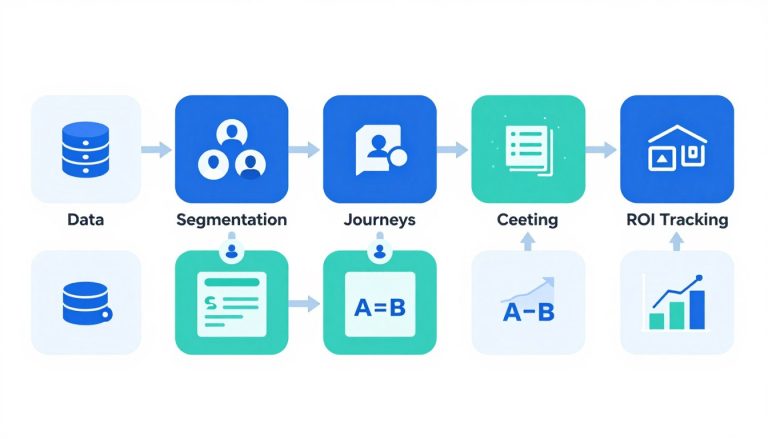
Complete Guide to AI Content Creation Workflow for 2025

But simply having access to AI tools isn’t enough. Without a structured workflow, even the most powerful AI technologies can lead to disjointed content, inconsistent brand voice, and missed opportunities. This comprehensive guide will walk you through creating a strategic AI content creation workflow that positions you at the forefront of content innovation for 2025 and beyond.
Why You Need a Defined AI Content Creation Workflow in 2025
As AI content tools become increasingly sophisticated, the difference between good and exceptional content marketing no longer lies in access to technology—it’s in how effectively you integrate these tools into a cohesive workflow. Here’s why a structured AI content creation workflow is critical in 2025:
Efficiency at Scale
Content demands have increased exponentially, with businesses now needing to produce 3x more content across multiple channels than just two years ago. A well-defined AI workflow can reduce content production time by up to 70% while maintaining consistent quality.
Quality Consistency
AI tools vary in their capabilities and outputs. Without a standardised workflow, content quality can fluctuate dramatically. A structured approach ensures that AI-generated content consistently meets your brand standards regardless of volume.
Competitive Advantage
By 2025, 87% of businesses will be using some form of AI in their content creation. The competitive edge now comes from how efficiently you implement these tools and how effectively you blend AI capabilities with human creativity and strategic thinking.

Ready to Transform Your Content Creation?
Start building your optimised AI content workflow today and produce high-quality content at scale.
The Core Stages of the AI Content Creation Workflow
An effective AI content creation workflow consists of six interconnected stages. Each stage leverages specific AI capabilities while incorporating human oversight to ensure optimal results. Let’s explore each stage in detail:
1. Strategy & Ideation

The foundation of any successful content initiative begins with strategic planning and idea generation. In 2025, this stage is significantly enhanced by AI’s ability to analyse vast amounts of data and identify patterns that humans might miss.
Key AI Applications in Strategy & Ideation:
- Audience Analysis: AI tools now analyse user behaviour across platforms to create detailed audience personas that go beyond demographics to include psychographic profiles, content preferences, and engagement patterns.
- Trend Forecasting: Predictive AI algorithms identify emerging topics and content formats before they peak, giving you a first-mover advantage in your industry.
- Keyword Intelligence: Advanced semantic analysis tools identify not just keywords but entire topic clusters and user intent patterns that drive content discovery.
- Content Gap Analysis: AI comparison tools evaluate your content against that of your competitors to identify opportunities for differentiation and optimal market positioning.
“The most valuable aspect of AI in content strategy isn’t just automation—it’s the ability to uncover insights from data at a scale and depth that was previously impossible for human analysis alone.”
2. Creation & Drafting

Once your strategy is defined, the next stage involves leveraging AI to generate initial content drafts across various formats. This is where prompt engineering becomes critical to guiding AI outputs toward your specific objectives.
Key AI Applications in Creation & Drafting:
- Text Generation: Large language models (LLMs) can now produce highly contextual, industry-specific content that requires minimal editing, especially when trained on your brand voice and style guidelines.
- Image Creation: AI image generators have evolved to create on-brand visuals that align perfectly with text content, eliminating the need for extensive stock photo searches or graphic design for routine content.
- Audio Synthesis: Text-to-speech and voice cloning technologies enable efficient creation of podcast snippets, audio versions of articles, and voice-overs for video content.
- Video Production: AI video tools can now generate short-form video content from text inputs, complete with animations, transitions, and synchronised narration.
Prompt Engineering Best Practices for 2025
Effective prompts now follow the C.L.E.A.R. framework:
- Context: Provide background information and purpose
- Length: Specify desired output length and format
- Examples: Include samples of preferred style/tone
- Audience: Define who will consume the content
- Requirements: List specific elements to include/exclude
3. Augmentation & Refinement

The human-in-the-loop process remains essential in 2025, though its nature has evolved. This stage focuses on augmenting AI-generated content with uniquely human insights, fact-checking, and ensuring brand alignment.
Key Human Interventions in Augmentation & Refinement:
- Fact Verification: Although AI fact-checking tools have improved, human oversight remains crucial for validating claims, statistics, and references, particularly for specialised or technical content.
- Narrative Enhancement: Humans excel at adding storytelling elements, emotional resonance, and authentic perspectives that even advanced AI models struggle to replicate convincingly.
- Brand Voice Alignment: AI-assisted style checkers help ensure content maintains consistent brand voice, but human editors make final judgments on tone appropriateness for specific contexts.
- Ethical Review: Human editors evaluate content for potential biases, cultural sensitivities, and ethical considerations that AI might miss or misinterpret.
4. Optimisation

In 2025, content optimisation has become increasingly sophisticated, moving beyond basic SEO to encompass readability, engagement potential, and cross-platform performance.
Key AI Applications in Optimisation:
- Semantic SEO Enhancement: AI tools now optimise content for search intent rather than just keywords, ensuring alignment with how search engines interpret user queries.
- Readability Calibration: Advanced readability algorithms adjust content complexity based on audience sophistication levels and platform expectations.
- Engagement Prediction: AI models predict likely engagement metrics for content before publication, enabling preemptive adjustments to enhance performance.
- Cross-Platform Formatting: Automated tools optimise content structure and format for different platforms (social media, blog, email, etc.) while maintaining message consistency.
5. Publishing & Distribution

Once content is created and optimised, AI streamlines the publishing and distribution process, ensuring content reaches the right audiences at optimal times across multiple channels.
Key AI Applications in Publishing & Distribution:
- Intelligent Scheduling: AI determines the optimal publishing times based on audience activity patterns and content type, thereby maximising the initial engagement potential.
- Dynamic Channel Selection: Machine learning algorithms recommend the most effective distribution channels for each piece of content, based on historical performance data and content characteristics.
- Automated Repurposing: AI tools automatically adapt content for different platforms, generating platform-specific variations that maintain core messaging while optimising for each channel’s unique requirements.
- Personalised Delivery: Content distribution systems utilise user data to tailor delivery timing and channel preferences to the individual level.
6. Analysis & Iteration

The final stage, which feeds back into the first, involves analysing content performance and extracting actionable insights to refine future content strategy and execution.
Key AI Applications in Analysis & Iteration:
- Performance Attribution: Advanced attribution models identify which specific content elements drive desired outcomes, from engagement to conversion.
- Competitive Benchmarking: AI continuously monitors competitor content performance, identifying emerging strategies and opportunities for differentiation.
- Content Lifecycle Management: Predictive algorithms identify when existing content needs refreshing or repurposing to maintain relevance and performance.
- Strategy Refinement: Machine learning system analyses patterns across successful content to recommend strategic adjustments for future content planning.
Streamline Your Content Workflow
Get our customizable AI content workflow template and start implementing these strategies today.
Essential AI Content Creation Toolkit for 2025
The AI content creation landscape continues to evolve rapidly. Here’s our curated selection of tools that represent the cutting edge for each workflow stage in 2025:
| Workflow Stage | Tool Category | Top Solutions | Key Capabilities |
| Strategy & Ideation | Audience Intelligence | SparkTrend AI, Audiense Insight, BuzzSumo | Predictive trend analysis, semantic audience segmentation, and content gap identification |
| Strategy & Ideation | Keyword Research | Semrush, Ahrefs, Clearscope | Intent mapping, competitive analysis, and topic clustering |
| Creation & Drafting | Text Generation | GPT-5, Claude 3, Anthropic Writer | Industry-specific content generation, brand voice adaptation, and multilingual support |
| Creation & Drafting | Visual Content | DALL-E 3, Midjourney V6, Runway | Brand-consistent image generation, style matching, and commercial usage rights |
| Augmentation & Refinement | Fact-Checking | FactCheck AI, Grammarly Business, Hemingway Editor | Source verification, citation generation, and accuracy scoring |
| Optimization | SEO & Readability | Surfer SEO, MarketMuse, Frase | Semantic content optimisation, readability analysis, engagement prediction |
| Publishing & Distribution | Content Distribution | Buffer Analyse, Hootsuite Impact, ContentCal | Cross-platform scheduling, performance prediction, automated repurposing |
| Analysis & Iteration | Performance Analytics | Google Analytics 5, ContentSquare, Hotjar | Content attribution modelling, engagement analysis, conversion tracking |

Integration Is Key
The most effective AI content workflows in 2025 aren’t built on individual tools but on integrated ecosystems. Look for solutions that offer robust APIs and native integrations to create a seamless workflow across all stages of content creation.
Best Practices and Ethical Considerations
As AI becomes increasingly central to content creation, maintaining authenticity, accuracy, and ethical standards is more important than ever. Here are the essential best practices for 2025:
Maintaining Content Authenticity
- Human Perspective Integration: Incorporate unique insights, personal experiences, and original research that AI cannot generate.
- Voice Consistency: Train AI on your specific brand voice and editorial guidelines to ensure AI-generated content remains authentic to your brand.
- Transparency: When appropriate, disclose the role of AI in content creation to maintain trust with your audience.
- Unique Value Addition: Focus AI on handling routine elements while humans contribute unique perspectives and creative direction.
Ensuring Factual Accuracy
- Systematic Fact-Checking: Implement a multi-layer verification process for all AI-generated claims and statistics. to ensure accuracy and reliability
- Source Attribution: Use AI tools that provide source citations and references for factual statements.
- Expert Review: Maintain a network of subject matter experts to validate technical content before publication.
- Continuous Learning: Feed fact-checking corrections back into your AI training to improve accuracy over time.

Ethical AI Content Guidelines for 2025
Recommended Practices
- Implement bias detection and correction in your AI content workflow
- Clearly disclose AI involvement in content creation when relevant
- Maintain human review for sensitive topics and ethical considerations
- Properly attribute sources and respect intellectual property
- Regularly audit AI outputs for unintended consequences
Practices to Avoid
- Generating content that impersonates specific individuals without permission
- Using AI to create deliberately misleading or factually inaccurate content
- Bypassing copyright protections through AI generation
- Removing all human oversight from the content creation process
- Ignoring cultural sensitivities in AI-generated global content
“The most successful AI content strategies in 2025 aren’t those that maximise automation, but those that find the optimal balance between AI efficiency and human creativity, ethics, and strategic thinking.”
Future-Proofing Your AI Content Creation Workflow
The AI content landscape is expected to continue evolving rapidly beyond 2025. Here’s how to build a workflow that remains effective as technologies and platforms change:

Building Adaptability Into Your Workflow
- Modular Architecture: Design your workflow with distinct, loosely-coupled stages that can evolve independently as new technologies emerge.
- API-First Approach: Prioritise tools with robust APIs that allow for seamless integration and replacement as better solutions become available.
- Continuous Learning Systems: Implement feedback loops that capture performance data and user interactions to improve your AI models and processes continually.
- Skill Development: Invest in developing your team’s prompt engineering and AI management capabilities to quickly adapt to new AI models and capabilities.
Emerging Trends to Watch
Multimodal Content Creation
AI systems that simultaneously work across text, image, audio, and video to create cohesive, integrated content experiences are becoming mainstream. Prepare by developing workflows that coordinate across these modalities.
Decentralised Content Verification
Blockchain-based systems for verifying content authenticity and provenance are gaining traction. Consider how these technologies can be integrated with your content attribution and verification processes.
Adaptive Content Experiences
Content that dynamically adjusts to individual user contexts, preferences, and behaviours in real-time is becoming technically feasible. Consider how your workflow cannot accommodate this level of personalisation.
A Note on AI Regulation
Content-related AI regulations are evolving rapidly across global markets. Build compliance checkpoints into your workflow and maintain flexibility to adapt to new requirements around transparency, data usage, and content authenticity.
Stay Ahead of the Content Revolution
Get expert guidance on building a future-proof AI content strategy tailored to your specific business needs.
Conclusion: Mastering the AI Content Creation Workflow
The AI content creation landscape of 2025 offers unprecedented opportunities for businesses to create more engaging, personalised, and compelling content at scale. By implementing a structured workflow that thoughtfully integrates AI capabilities with human creativity and oversight, content teams can significantly increase their productivity while maintaining—and often enhancing —their content quality.
Remember that the most successful AI content strategies aren’t about replacing human creativity but augmenting it. The six-stage workflow outlined in this guide—Strategy & Ideation, Creation & Drafting, Augmentation & Refinement, Optimisation, Publishing & Distribution, and Analysis & Iteration—provides a framework that balances AI efficiency with human strategic thinking.
As you implement and refine your own AI content creation workflow, focus on building adaptability, maintaining ethical standards, and continuously learning from performance data. The organisations that thrive in the content landscape of 2025 and beyond will be those that view AI not just as a productivity tool but as a strategic partner in their content creation process.

Frequently Asked Questions
How much of my content creation process should I automate with AI?
The optimal automation level varies by organisation and content type. In 2025, most successful content teams automate 60-80% of routine content production tasks while maintaining human involvement in strategy, creative direction, fact-checking, and final approval. Start by automating repetitive, time-consuming tasks where AI excels (research, drafting, optimisation) while keeping strategic and creative elements under human control.
How can I ensure my AI-generated content remains authentic to my brand voice?
Train your AI tools on your existing high-quality content and create detailed brand voice guidelines. Many advanced AI platforms now offer fine-tuning capabilities that allow you to customise models to your specific brand voice. Implement a consistent human review process focused specifically on voice and tone. Over time, provide feedback to your AI system on voice-related adjustments to improve future outputs.
What skills should my content team develop to thrive in an AI-augmented workflow?
Focus on developing skills that complement, rather than compete with, AI capabilities, including strategic thinking, prompt engineering, content curation, emotional intelligence, ethical judgment, and creative direction. Technical skills, such as fundamental data analysis and configuring AI tools, are increasingly valuable. The most crucial meta-skill is adaptability—the ability to quickly learn new tools and approaches as the technology landscape evolves.
How should I disclose the use of AI in my content creation process?
Transparency requirements vary by industry, audience, and the type of content. By 2025, many sectors are expected to have established disclosure standards. Generally, disclosure is more critical for journalistic, academic, or advisory content than for marketing materials. When disclosure is appropriate, focus on explaining how AI enhances rather than replaces human judgment in your process. Some organisations use simple “AI-assisted” labels, while others provide more detailed explanations of their human-AI collaboration process.