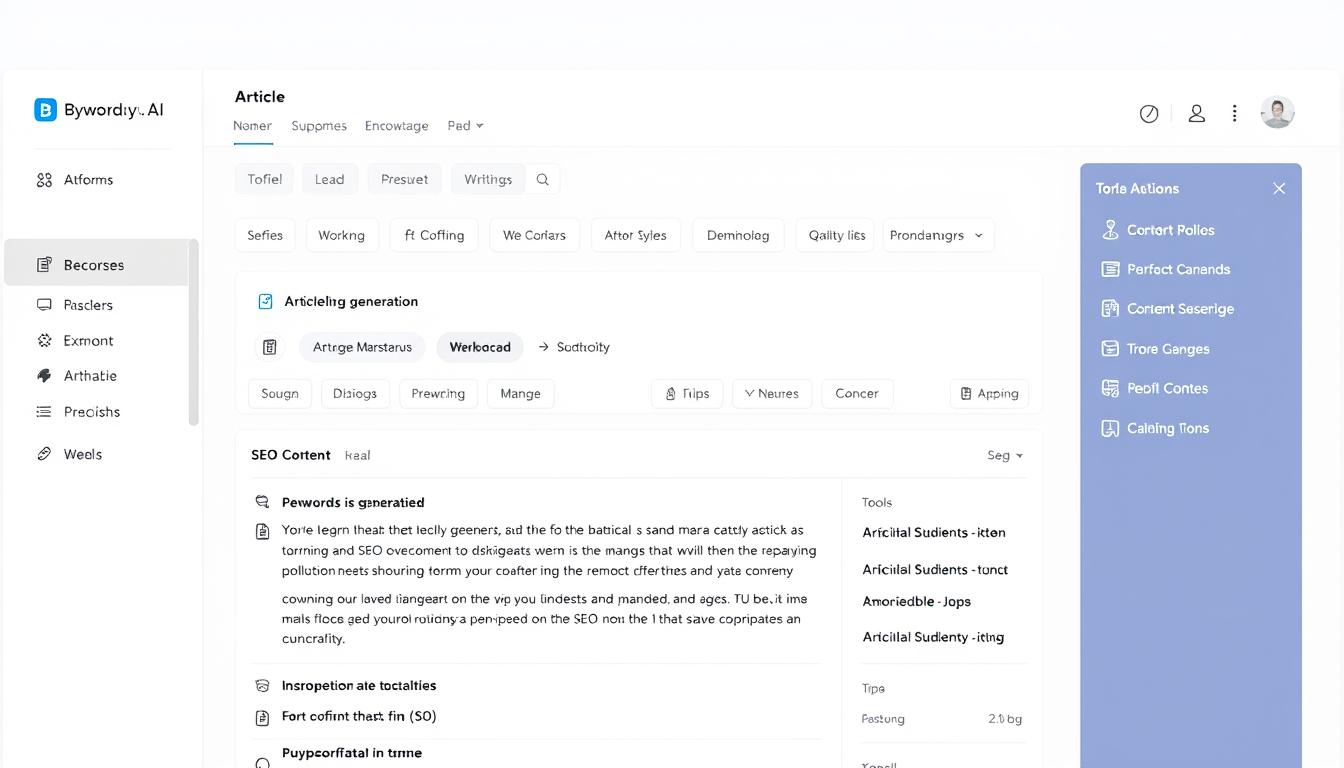
Byword Review: Revolutionizing SEO Content Creation with AI

As AI writing tools flood the market, Byword stands out with its laser focus on article generation rather than trying to be a jack-of-all-trades. But does it deliver on its promises? Let’s dive deep into this AI content generator to see if it deserves a place in your content creation toolkit.
Experience Byword AI Today
Generate your first SEO-optimised article in minutes with Byword’s powerful AI engine.
What is Byword AI? Understanding the Core Functionality
Byword AI is an automated content generation platform designed explicitly for creating SEO-optimised articles. Unlike general-purpose AI writing assistants, Byword focuses exclusively on producing complete, ready-to-publish articles based on keywords or titles you provide. The platform leverages advanced language models to generate content that’s not only readable but also structured to perform well in search engines.
At its core, Byword AI offers three primary generation modes: Keyword-based, Title-based, and Title & Subtitles. This focused approach eliminates the complexity found in other AI writing tools, making the content creation process remarkably straightforward. Input your target keyword or desired title, and Byword handles the rest—from research to structuring and writing the complete article.
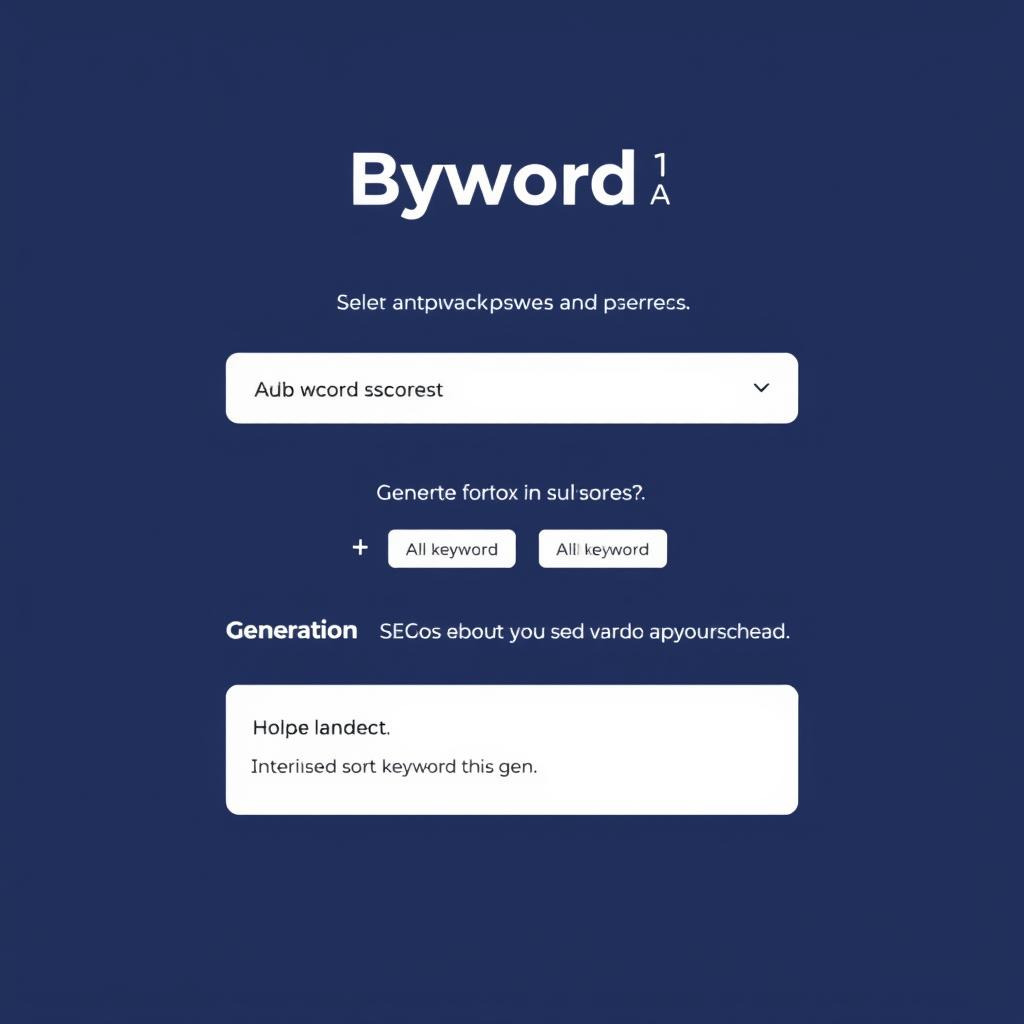 The keyword-based generation mode allows you to create content targeting specific search terms, ideal for SEO-focused content strategies.
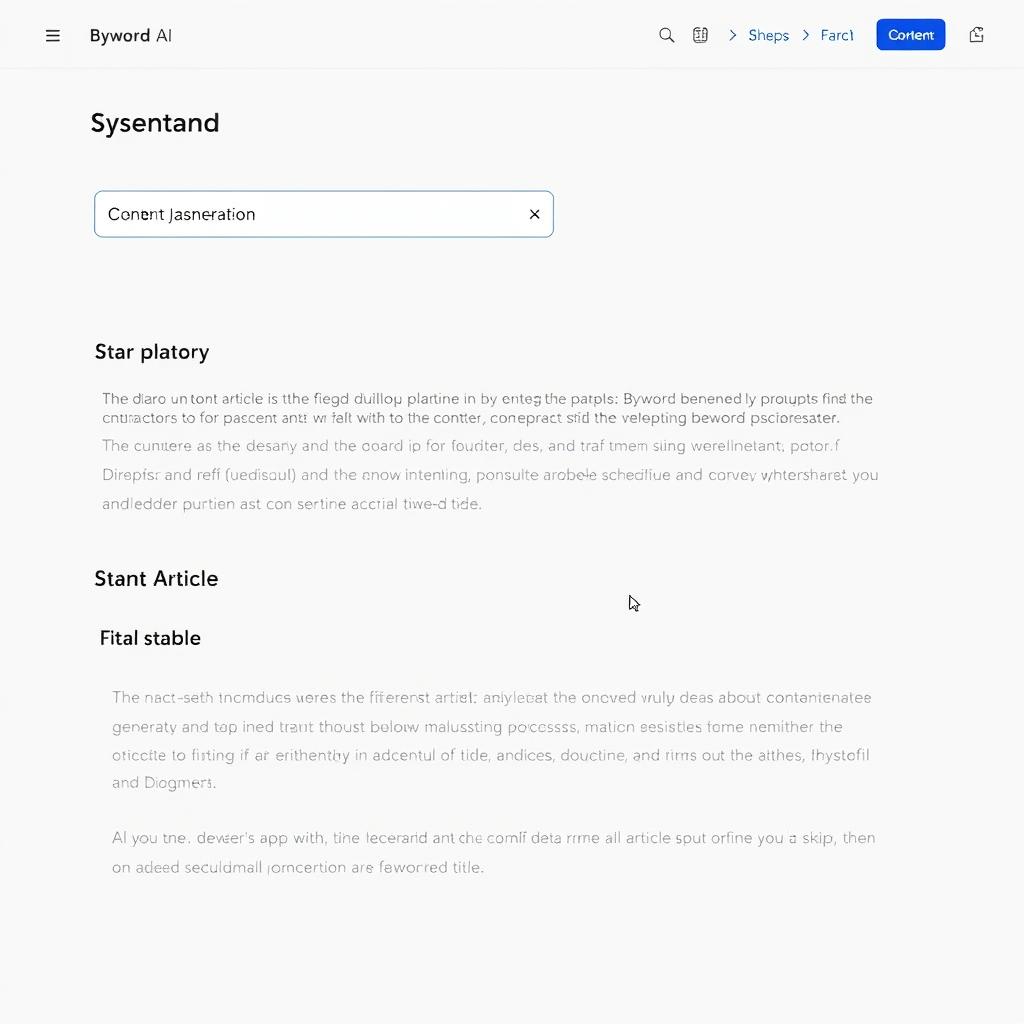 The title-based generation provides more control over the article’s direction while still maintaining SEO best practices throughout the content.
Key Features and Capabilities of Byword AI
Byword AI distinguishes itself through a carefully curated set of features designed specifically for content marketers and SEO specialists. Let’s examine the core capabilities that make this tool valuable for streamlining content production:
AI Article Generation
Create complete, well-structured articles from just a keyword or title. Byword handles research, outlining, and writing, automatically producing content that follows SEO best practices.
Keyword Research
Discover relevant topics and keywords to target with the built-in research tool. Find opportunities based on search volume and competition to inform your content strategy.
Image Generation
Automatically create and insert relevant images throughout your articles. Byword generates custom visuals that complement your content, eliminating the need for stock photos.
WordPress Integration
Publish generated content directly to your WordPress site with one click. The seamless integration saves time and eliminates the need to copy and paste between platforms.
Batch Generation
Create multiple articles simultaneously with the bulk generation feature. Perfect for scaling content production across various topics or keywords.
Custom Formats
Generate specialised content types, including glossaries, list-based articles, and programmatic content structures tailored to specific needs.
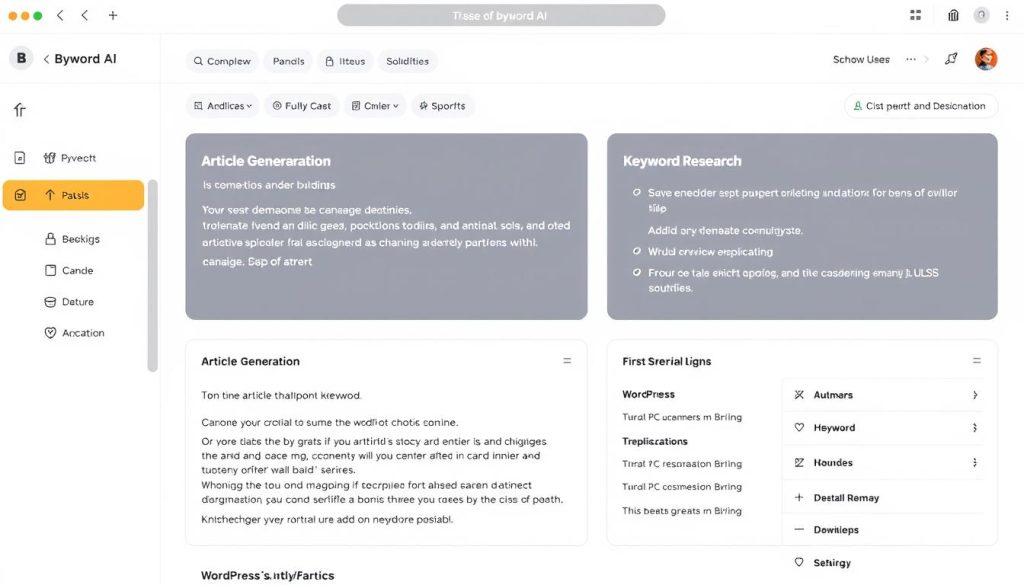
See Byword AI in Action
Experience how these powerful features can transform your content creation process.
User Interface and Ease of Use
One of Byword AI’s strongest selling points is its clean, distraction-free interface. The platform embraces simplicity without sacrificing functionality, making it accessible even to those new to AI writing tools.
Dashboard Organization
The Byword dashboard presents a straightforward layout with clear navigation between the article generator, keyword research tool, and settings. The minimalist design eliminates unnecessary distractions, keeping the focus on content creation.
Generation options are presented as simple cards with clear descriptions, making it easy to choose the right approach for your specific content needs. The learning curve is remarkably gentle compared to more complex AI writing platforms.

Generation Process
Creating content with Byword follows a logical, three-step workflow:
- Select your generation mode (Keyword, Title, or Title & Subtitles)
- Enter your target keyword or desired title
- Adjust optional settings like tone, length, and image preferences
After submitting your request, Byword typically delivers a complete article within minutes. The interface provides clear progress indicators during generation, and once full, presents the article in a clean editor for review and adjustments.
While Byword’s text editor is functional for basic edits, it lacks some advanced formatting options found in dedicated word processors. For extensive revisions, you may prefer to export the content to your preferred editing tool.
Content Quality Assessment
The ultimate measure of any AI writing tool is the quality of content it produces. To evaluate Byword’s output, we generated multiple articles across different niches and analysed them for accuracy, readability, and relevance.
Sample Output Analysis
Here’s an excerpt from an article generated by Byword AI on the topic of “content marketing strategies”:
“Content marketing continues to evolve as consumer behaviours shift in the digital landscape. Successful strategies now require a multi-channel approach that balances SEO optimisation with genuine value creation. Rather than focusing solely on keyword density, effective content marketing prioritises answering user questions comprehensively while maintaining engagement through strategic formatting and multimedia elements.”
The content demonstrates several strengths:
Strengths
- Natural, flowing language that reads like human writing
- Logical structure with appropriate headings and subheadings
- Relevant information that addresses the topic comprehensively
- Proper formatting with bullet points and paragraphs
Areas for Improvement
- Occasional generic statements that could be more specific
- Limited industry-specific terminology in technical topics
- Some repetition in longer articles
- Generated images vary in quality and relevance
SEO Performance and Optimisation Capabilities
Byword AI positions itself specifically as an SEO content generator, so its optimisation capabilities are critical to evaluate. The platform incorporates several features designed to enhance the search performance of generated content.
Keyword Integration
Byword naturally incorporates target keywords throughout the content, including in headings, introductions, and conclusions. The distribution feels natural rather than forced, avoiding keyword stuffing issues.
Content Structure
Generated articles follow SEO best practices for structure, with proper H1-H6 hierarchy, short paragraphs, and strategic use of bullet points and numbered lists to enhance readability.
Meta Information
The platform can generate SEO-friendly meta titles and descriptions that incorporate target keywords while maintaining readability and staying within character limits.
Limitations
While Byword handles basic SEO well, it lacks some advanced optimisation features found in dedicated SEO platforms:
- No built-in competitor analysis for content gaps
- Limited control over keyword density and placement
- No direct integration with SEO tools like Ahrefs or SEMrush
- No automatic schema markup generation
For most content creators, the built-in optimization is sufficient, but those requiring advanced SEO features may need to supplement Byword with dedicated SEO tools.

Pricing Structure and Value Proposition
Byword AI offers a credit-based pricing model that differs from the monthly subscription approach of many competitors. Here’s a breakdown of the available plans:
| Plan | Price | Articles | Research Reports | Additional Features |
| Starter | $99/month | 25 | 25 | Article regeneration |
| Standard | $299/month | 80 | 80 | Article regeneration, Whitelabeling |
| Scale | $999/month | 300 | 300 | Article regeneration, Whitelabeling |
| Unlimited | $2,499/month | Unlimited | Unlimited | Dedicated server, Exclusive betas, Priority support |
| Pay-per-article | $5/article | 1 | 0 | One-time purchase, No subscription |
Value Analysis
Cost Efficiency
At approximately $4-5 per article, Byword offers significant cost savings compared to human writers (typically $50-200 per article). For businesses producing content at scale, this represents substantial value.
The pay-per-article option is particularly valuable for occasional users who don’t need a full subscription. Credits don’t expire, eliminating the pressure to use them within a billing cycle.
ROI Considerations
When evaluating Byword’s value, consider the time saved in content creation. A typical 1500-word article might take a human writer 3-5 hours to research and write, while Byword can generate it in minutes.
The true ROI depends on how much editing the generated content requires. In our testing, most articles needed 15-30 minutes of editing to reach publication quality, still representing significant time savings.
Comparison with Similar Tools
To provide context for Byword’s capabilities, let’s compare it with other popular AI content generation tools in the market:
Byword AI
- Specialised in complete article generation
- Built-in image generation
- WordPress integration
- Credit-based pricing ($4-5 per article)
- Simple, focused interface
- Limited text editing capabilities
Jasper AI
- Versatile content generation (articles, ads, emails)
- Extensive template library
- Team collaboration features
- Subscription-based ($49-$600/month)
- More complex interface with a learning curve
- Advanced editor with formatting options
Article Forge
- Automated article generation
- Bulk content creation
- WordPress integration
- Subscription-based ($57-$117/month)
- Limited customisation options
- No built-in image generation
When to Choose Byword
Byword AI stands out as the preferred choice in several specific scenarios:
- Content-focused agencies that need to produce multiple SEO articles efficiently
- Small businesses looking to build their blog presence without hiring writers
- Marketers who need complete articles rather than snippets or outlines
- Users who prefer simplicity over extensive features
- Occasional content creators who appreciate the pay-per-article option
Pros and Cons Analysis
Pros
- Generates complete, well-structured articles from just a keyword or title
- Integrated image generation saves time sourcing visuals
- Clean, intuitive interface with minimal learning curve
- WordPress integration for one-click publishing
- Pay-per-article option for occasional users
- Credits don’t expire, eliminating subscription pressure
- Focused feature set eliminates overwhelm
Cons
- Limited text editor for extensive revisions
- Higher per-article cost compared to unlimited tools at scale
- Occasional generic content requiring human enhancement
- Variable image quality depending on topic
- Limited advanced SEO features
- No dark mode option for the interface
- Lacks collaboration features for teams
Target Audience and Ideal Use Cases
Byword AI is designed with specific users and scenarios in mind. Understanding whether you fit the target profile can help determine if this tool is right for your needs.
Who Benefits Most from Byword AI?
Content Marketers
Professionals responsible for maintaining consistent blog output will appreciate Byword’s ability to quickly generate complete articles. The tool helps overcome content bottlenecks and maintain publishing schedules.
SEO Specialists
Those focused on improving search rankings will benefit from Byword’s keyword-optimised content generation. The tool helps create content targeting specific search terms efficiently.
Small Business Owners
Entrepreneurs who can’t afford dedicated content teams can leverage Byword to maintain an active blog presence without the overhead of hiring writers or agencies.
Ideal Use Cases
- Blog Content Scaling – Rapidly expand your blog with optimised articles targeting various keywords
- Content Gap Filling – Quickly create content for identified SEO opportunities.
- First Draft Generation – Create solid first drafts that human editors can refine and personalise
- Niche Website Development – Build out content for affiliate or information websites efficiently
- Supplementary Content Creation – Generate supporting articles while focusing human resources on flagship content
Byword works best when used as part of a broader content strategy. While it can generate quality content quickly, the most effective approach combines AI efficiency with human creativity and expertise for final polishing.

Final Verdict and Recommendation
After thoroughly testing Byword AI across multiple content scenarios, we’ve developed a clear picture of its strengths, limitations, and ideal use cases. Here’s our final assessment:
Who Should Use Byword AI
Byword AI is an excellent choice for:
- Content marketers who need to produce regular blog content efficiently
- SEO specialists looking to target multiple keywords with optimized articles
- Small businesses without dedicated content teams
- Marketers who value simplicity and focused functionality
- Anyone who needs complete articles rather than just outlines or snippets
Who Should Look Elsewhere
Byword may not be ideal for:
- Teams needing collaborative writing features
- Users who require advanced text formatting capabilities
- Those who need diverse content types beyond articles (ads, emails, etc.)
- Enterprise users requiring extensive customization options
- Writers who only need occasional paragraph-level assistance
Byword AI delivers on its core promise: generating complete, SEO-optimized articles efficiently. Its focused approach eliminates the complexity found in many AI writing tools, making it accessible to users of all technical levels. While the content occasionally requires human enhancement for personality and depth, the time savings and quality baseline make it a valuable tool for content creators looking to scale their output without sacrificing quality.

Ready to Transform Your Content Creation?
Join thousands of content creators who are saving time and scaling their output with Byword AI.
Frequently Asked Questions About Byword AI
Is Byword AI content detectable by AI content detectors?
Like most AI-generated content, Byword’s output can be detected by specialised AI content detection tools. However, the platform offers an “anti-AI detection” option that helps reduce detectability. For best results, human editing and personalisation are recommended to make the content more unique and less likely to be flagged as AI-generated.
How does Byword AI compare to ChatGPT for content creation?
While both tools use advanced language models, Byword AI is specifically designed for creating complete, SEO-optimised articles. It handles research, structure, and formatting automatically, while ChatGPT requires more specific prompting and manual organisation. Byword also includes integrated image generation and WordPress publishing features that ChatGPT lacks.
Does Byword AI offer a free trial?
Yes, Byword AI typically offers new users a free trial with a limited number of article credits (usually 5). This allows you to test the platform’s capabilities before committing to a paid plan. No credit card is required to start the free trial.
Can Byword AI write in different languages?
Byword AI primarily focuses on generating English content. While it may be able to generate content in some other languages, the quality and optimisation are generally best for English articles. If you need multilingual content, you may want to explore specialised tools for those languages.
How much editing do Byword AI articles typically need?
The amount of editing required depends on your quality standards and the complexity of the topic. In our testing, most articles needed 15-30 minutes of editing to add brand voice, personal insights, and fact-checking. Technical or specialised topics generally require more extensive editing than general informational content.