The Complete Guide to AI Marketing Automation & Personalisation (2026 Edition)

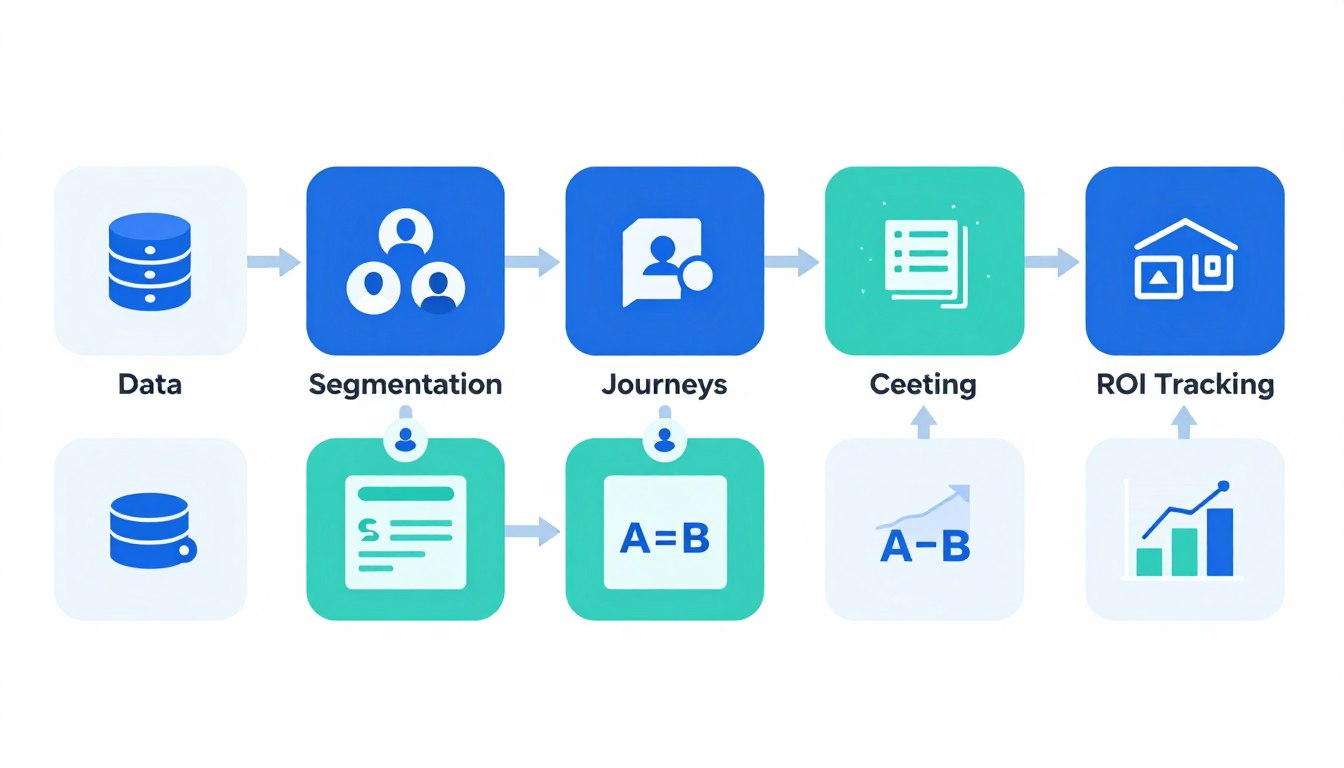
This comprehensive guide introduces a simple yet powerful system to transform your marketing: data → segmentation → journeys → creative → testing → ROI tracking. By implementing this framework, you’ll move beyond superficial AI usage to create truly personalized experiences that drive measurable results.
The Problem: AI Without Personalisation
Despite 91% of businesses reporting they use AI in marketing, most still deliver one-size-fits-all campaigns. The disconnect happens because organisations implement AI tools without a cohesive strategy for using customer data effectively.
“The biggest challenge isn’t acquiring AI technology—it’s implementing it in ways that actually deliver personalised experiences at scale.”
Common symptoms of this problem include:
- Sending identical email campaigns to your entire database
- Running ads with generic messaging across all audiences
- Showing the same website experience to all visitors
- Making product recommendations based on popularity rather than individual preferences
- Measuring campaign success by overall performance rather than segment-specific impact
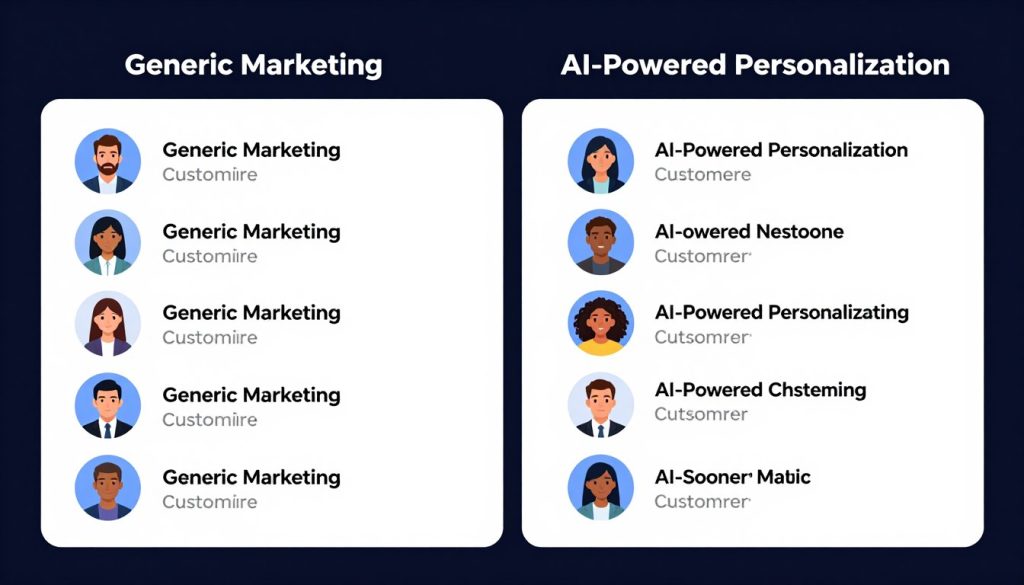
The consequences are significant: lower engagement rates, reduced conversion rates, and diminished ROI on marketing investments. Most importantly, you miss the opportunity to build meaningful connections with customers who increasingly expect personalised experiences.
The Solution: A Systematic Approach to AI Marketing Automation & Personalisation
Successful AI-powered personalisation requires a systematic approach that connects each component of the marketing process. Our framework provides this structure:
| Framework Component | Purpose | Key Outcome |
| Data | Establish a unified customer data foundation | Single customer view across all touchpoints |
| Segmentation | Create dynamic, behaviour-based audience groups | Targeted audience clusters that update automatically |
| Journeys | Design automated, personalised customer pathways | Contextual experiences across channels |
| Creative | Generate and optimise personalised content | Tailored messages, offers, and visuals |
| Testing | Continuously optimise through AI-powered experiments | Data-driven refinement of all elements |
| ROI Tracking | Measure impact and attribute value | Clear visibility into personalisation performance |
This framework works because it addresses the entire personalisation ecosystem rather than isolated tactics. Let’s explore each component in detail.
Data: The Foundation for AI Marketing Success
Effective AI personalisation begins with a solid data foundation. Without clean, unified customer data, even the most sophisticated AI models will produce disappointing results.
Building Your Customer Data Infrastructure
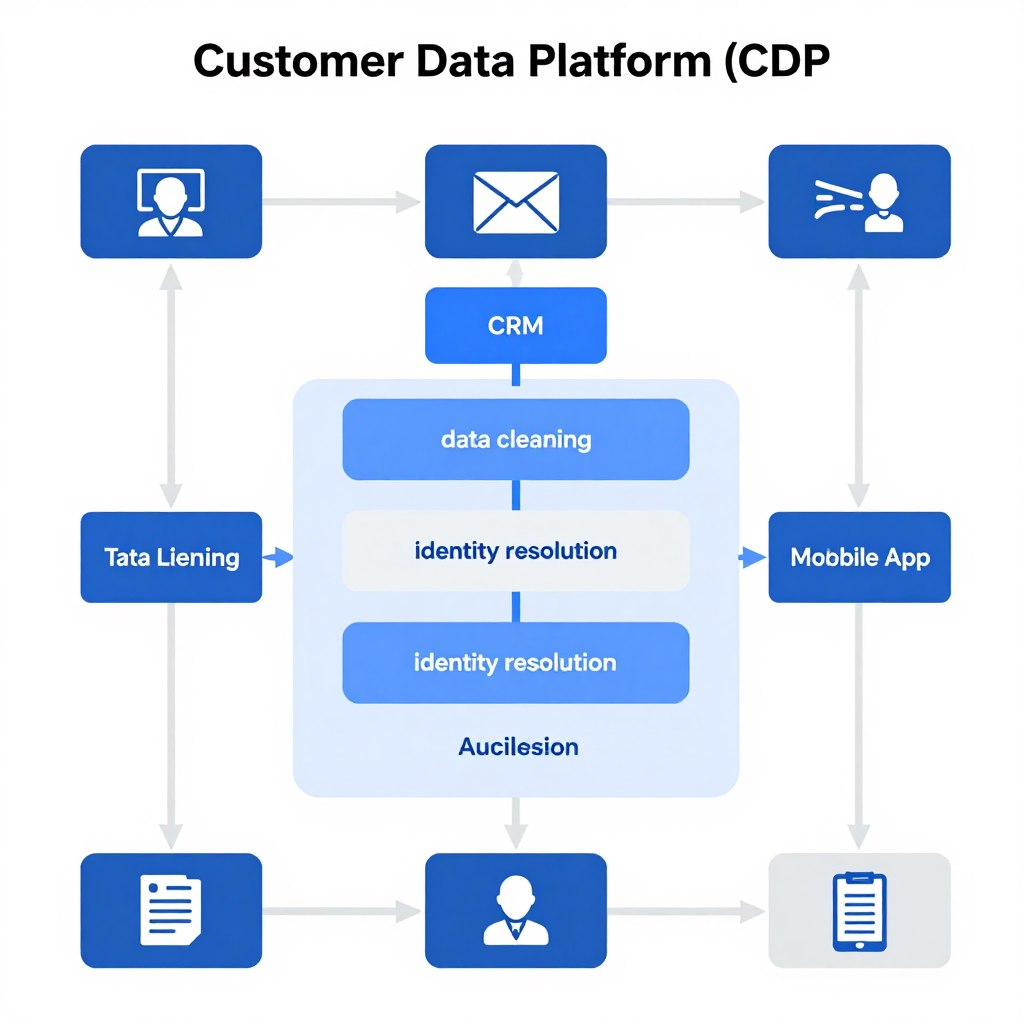
The first step is implementing a robust customer data platform (CDP) that can unify information from multiple sources:
- Website behaviour and browsing history
- Purchase and transaction data
- Email engagement metrics
- Social media interactions
- Customer service touchpoints
- Offline interactions and events
Data Quality and Governance
AI models are only as good as the data they’re trained on. Implement these practices to ensure high-quality data:
- Establish consistent naming conventions across platforms
- Create a unified customer ID system for cross-channel identification
- Implement data validation rules to catch errors at entry
- Regularly audit and clean your database
- Document your data architecture for team alignment
Ready to Build Your AI-Ready Data Foundation?
Download our Data Readiness Assessment Tool to identify gaps in your current infrastructure and create an action plan for building an AI-ready data foundation.
First-Party Data Strategy
With the decline of third-party cookies, developing a strong first-party data strategy is essential. Consider these approaches:
Value Exchange Mechanisms
Create clear value exchanges where customers willingly share data in return for better experiences:
- Preference centres that give users control
- Loyalty programs with personalisation benefits
- Interactive tools that provide value while collecting data
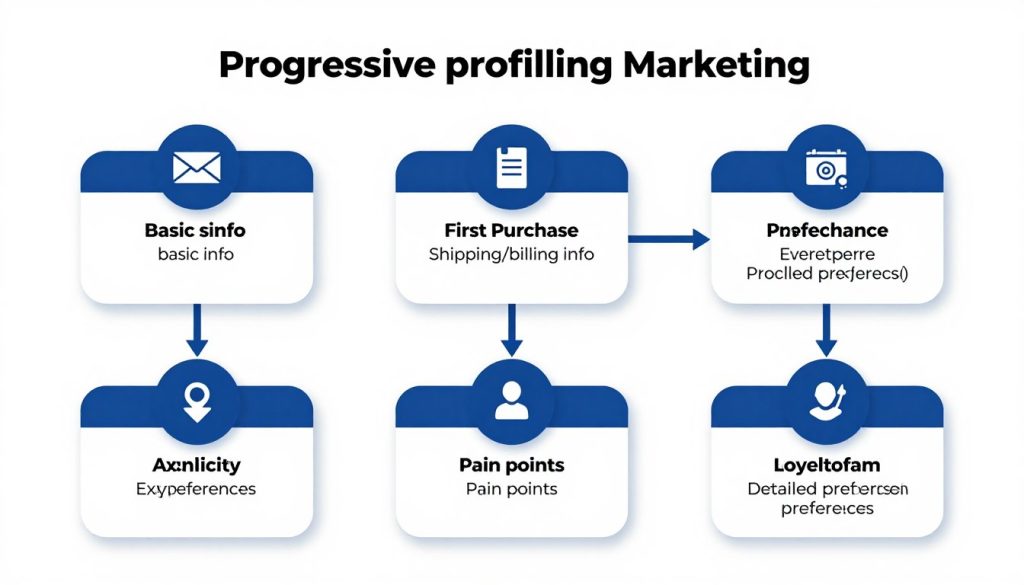
Progressive Profiling
Build customer profiles gradually over time rather than asking for everything upfront:
- Start with minimal information
- Request additional data at logical touchpoints
- Use behaviour to infer preferences
Segmentation: Dynamic, AI-Driven Audience Clustering
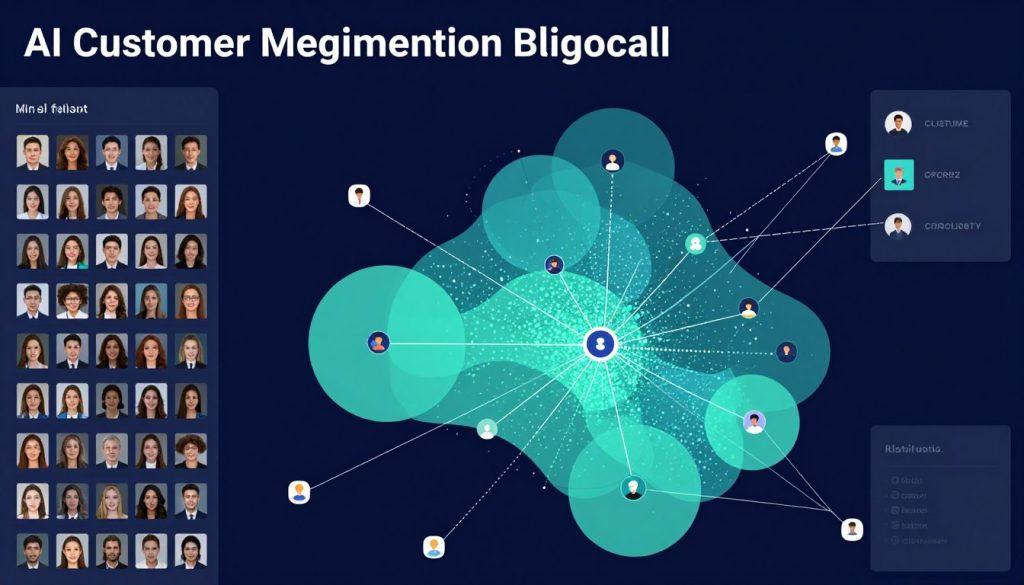
Traditional segmentation relies on static rules that quickly become outdated. AI-powered segmentation continuously analyses customer behaviour to create dynamic, self-updating audience groups.
Beyond Demographic Segmentation
AI enables more sophisticated segmentation approaches:
| Segmentation Type | Description | Example |
| Behavioral | Groups based on actions and interactions | Frequent browsers who haven’t purchased |
| Predictive | Groups based on the likelihood of future actions | High churn risk customers |
| Lifecycle | Groups based on customer journey stage | New customers in the onboarding phase |
| Value-based | Groups based on current and potential value | High-value customers with growth potential |
| Intent-based | Groups based on purchase intent signals | Active product researchers |
Implementing AI Segmentation
Follow these steps to implement effective AI-driven segmentation:
- Define clear business objectives for each segment
- Identify the key data points that signal segment membership
- Configure your AI system to continuously update segments based on new behaviour
- Create segment activation plans for each marketing channel
- Establish feedback loops to measure segment performance
“The power of AI segmentation isn’t just in creating more segments—it’s in creating the right segments that align with business goals and update automatically as customer behaviour changes.”
Micro-Segmentation for Hyper-Personalisation
As your AI capabilities mature, you can move toward micro-segmentation—creating highly specific audience groups with unique needs and preferences. This approach enables truly personalised experiences that feel custom-designed for each recipient.
Unlock Advanced AI Segmentation
Get our AI Segmentation Playbook with step-by-step instructions for implementing dynamic, behaviour-based audience clustering in your marketing platform.
Journeys: Automated, Personalised Customer Pathways
With data and segmentation in place, you can design AI-powered customer journeys that adapt to individual behaviours and preferences in real-time.
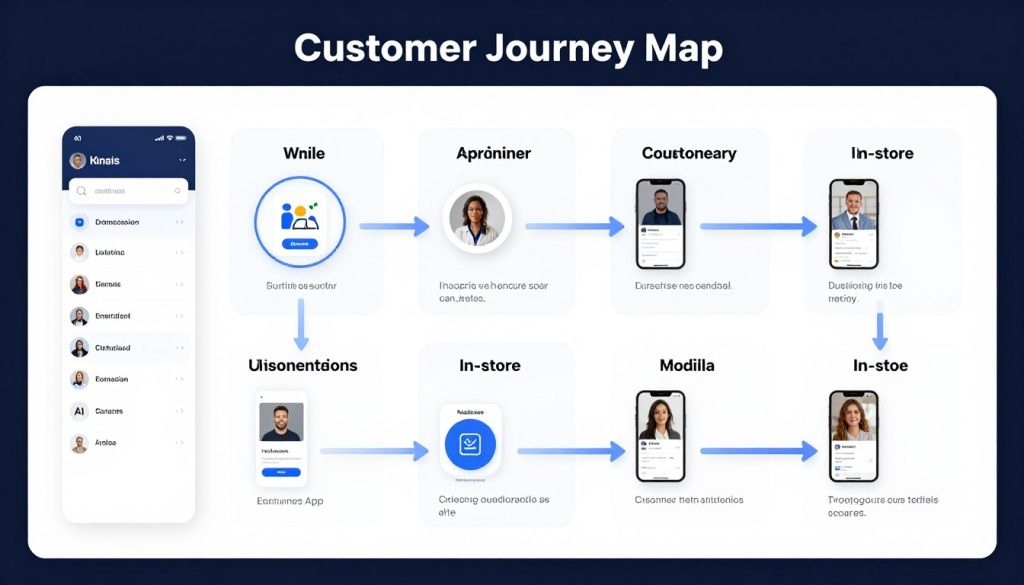
Journey Mapping with AI
AI transforms traditional journey mapping by:
- Identifying common paths customers take across channels
- Spotting friction points and drop-off moments
- Suggesting optimal intervention points
- Predicting next best actions for each customer
Next-Best-Action Recommendations
AI can analyse customer context to determine the optimal next step in their journey:
Customer Signals
- Recent browsing behaviour
- Purchase history
- Email engagement
- Support interactions
- Seasonal factors
AI-Recommended Actions
- Send personalised product recommendations
- Offer targeted promotions
- Provide educational content
- Request feedback
- Initiate proactive support
Cross-Channel Orchestration
Effective AI journeys maintain consistency across all customer touchpoints:
| Channel | Personalization Opportunity | AI Application |
| Content, timing, frequency, offers | Send-time optimisation, dynamic content insertion | |
| Website | Homepage, product recommendations, navigation | Real-time content adaptation, predictive recommendations |
| Paid Media | Ad creative, targeting, bidding | Automated creative optimisation, audience targeting |
| Mobile App | In-app experiences, notifications | Contextual triggers, location-based personalisation |
| Customer Service | Support recommendations, issue resolution | Predictive support, conversation intelligence |
Design Intelligent Customer Journeys
Schedule a consultation with our journey-mapping experts to design AI-powered customer pathways that adapt to individual behaviours in real time.
Creative: AI-Generated and Optimised Content
AI transforms content creation and optimisation, enabling personalised messaging at scale without overwhelming your creative team.
Generative AI for Content Creation
Leverage AI to generate personalised content elements:
Text Generation
- Product descriptions tailored to user preferences
- Personalised email subject lines and body copy
- Dynamic ad headlines and descriptions
- Custom landing page content
Visual Generation
- Personalised product imagery
- Custom banner ads for different segments
- Tailored social media visuals
- Dynamic infographics and data visualisations
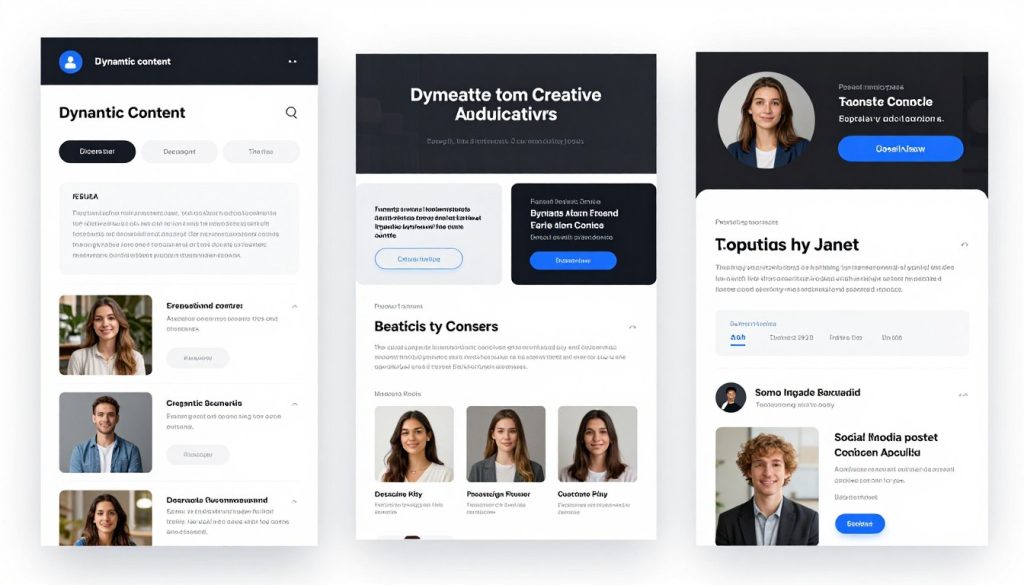
Dynamic Content Optimisation
AI doesn’t just create content—it continuously optimises it based on performance:
- Automatic A/B testing of content variations
- Real-time adaptation based on engagement signals
- Contextual content selection based on user state
- Multivariate testing across content elements
“The most powerful AI creative systems don’t just generate content—they learn what works for each audience segment and continuously refine their outputs.”
Personalisation at Scale
Implement these strategies to achieve true creative personalisation at scale:
- Create modular content elements that can be dynamically assembled
- Develop content templates with personalisation variables
- Build a content taxonomy that maps elements to customer attributes
- Establish creative guidelines for AI-generated content
- Implement human review workflows for quality control
Scale Your Creative Personalisation
Explore our AI Content Studio to generate and optimise personalised marketing content across all your channels.
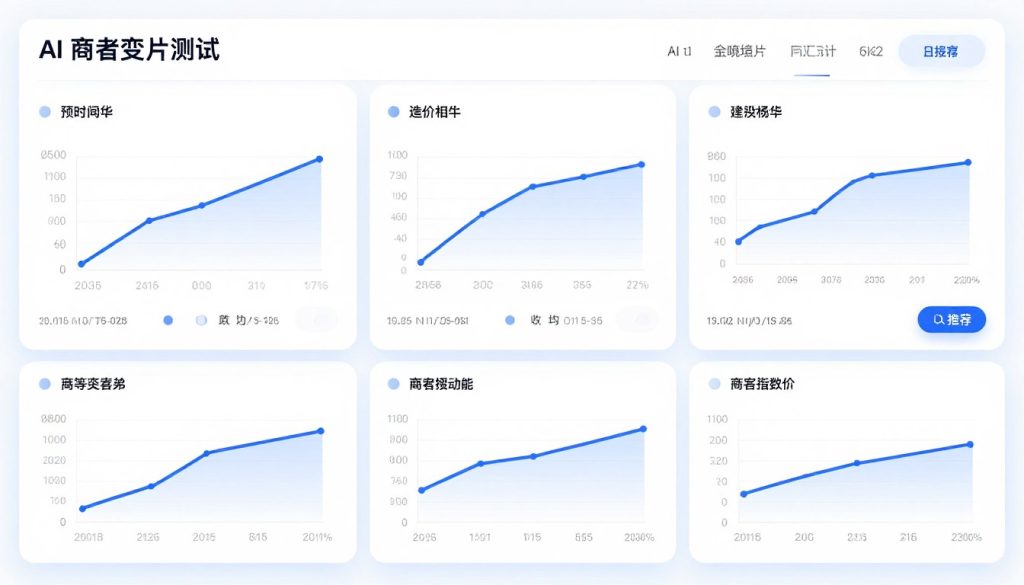
Testing: Continuous AI-Powered Experimentation
AI transforms testing from occasional experiments to continuous optimisation across all marketing elements.
Beyond Traditional A/B Testing
AI-powered testing offers significant advantages over traditional approaches:
| Traditional Testing | AI-Powered Testing |
| Tests one or two variables at a time | Tests multiple variables simultaneously |
| Requires large sample sizes | Can identify patterns with smaller samples |
| Manual setup and analysis | Automated test creation and evaluation |
| Fixed test duration | Dynamic allocation based on performance |
| One-size-fits-all winners | Segment-specific winning variations |
Implementing a Continuous Testing Framework
Follow these steps to establish an effective AI testing program:
- Define clear testing objectives aligned with business goals
- Identify high-impact elements to test (headlines, images, offers, etc.)
- Configure your AI system to automatically generate variations
- Implement real-time performance monitoring
- Create feedback loops to apply learnings across campaigns
Multi-Armed Bandit Testing
One of the most powerful AI testing approaches is the multi-armed bandit algorithm, which:
- Dynamically allocates traffic to better-performing variations
- Balances exploration (trying new variations) with exploitation (using what works)
- Minimises opportunity cost during testing
- Continuously adapts to changing customer preferences
Implement AI-Powered Testing
Get our AI Testing Framework Guide to implement continuous, automated experimentation across your marketing campaigns.
ROI Tracking: Measuring the Impact of AI Personalisation
The final component of our framework ensures you can accurately measure the business impact of your AI personalisation efforts.
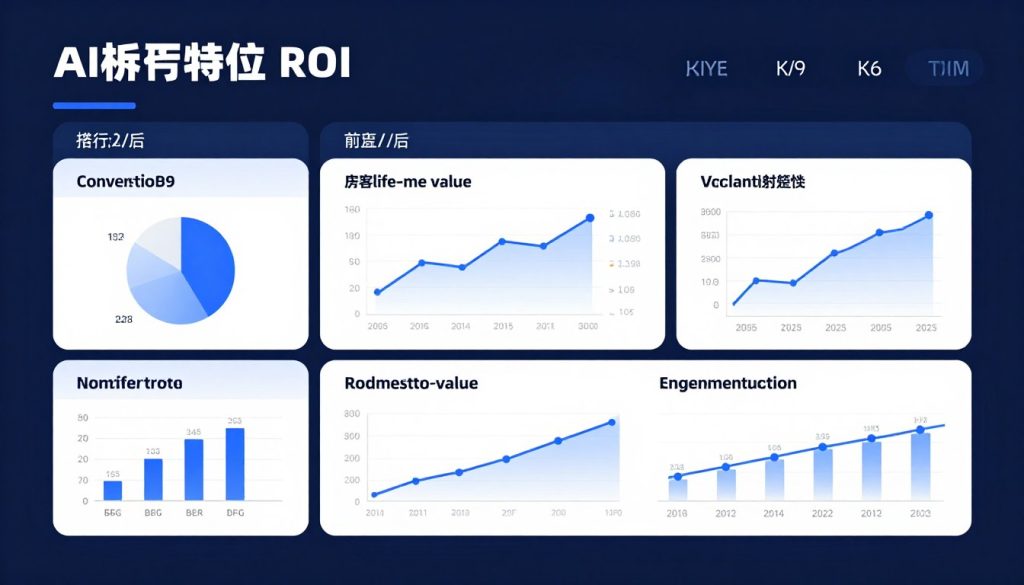
Key Performance Indicators for AI Marketing
Track these metrics to measure the effectiveness of your AI personalisation:
Engagement Metrics
- Click-through rate by segment
- Time on site for personalised experiences
- App engagement for personalised users
- Content consumption patterns
Business Impact Metrics
- Conversion rate lift from personalisation
- Average order value changes
- Customer lifetime value impact
- Retention rate improvements
Attribution Modelling for AI Campaigns
Accurate attribution is essential for understanding the true impact of AI personalisation:
- Implement multi-touch attribution to track the full customer journey
- Use AI to identify the most influential touchpoints
- Compare personalised versus non-personalised campaign performance
- Measure incremental lift through controlled experiments
Continuous Improvement Framework
Establish a systematic approach to using performance data for ongoing optimisation:
- Set clear performance benchmarks for each campaign
- Implement real-time monitoring dashboards
- Schedule regular performance review sessions
- Create action plans based on performance insights
- Document learnings to inform future campaigns
“The true value of AI personalisation emerges when you can clearly measure its impact on business outcomes and continuously refine your approach based on performance data.”
Master AI Marketing Measurement
Get our AI Marketing ROI Toolkit with templates, dashboards, and attribution models designed specifically for measuring personalisation impact.
Practical Applications Across Marketing Channels
Now that we’ve covered the core framework, let’s explore how to apply it across key marketing channels.
Email Marketing Automation & Personalisation
Email remains one of the most powerful channels for AI personalisation:
AI-Powered Email Strategies
- Dynamic content blocks that adapt to recipient preferences
- Send-time optimisation based on individual open patterns
- Subject line personalisation using predictive models
- Automated journey flows triggered by behaviour
Transform Your Email Marketing
Explore our Email Personalisation Playbook for step-by-step guidance on implementing AI-driven email campaigns.
Paid Advertising Automation & Personalisation
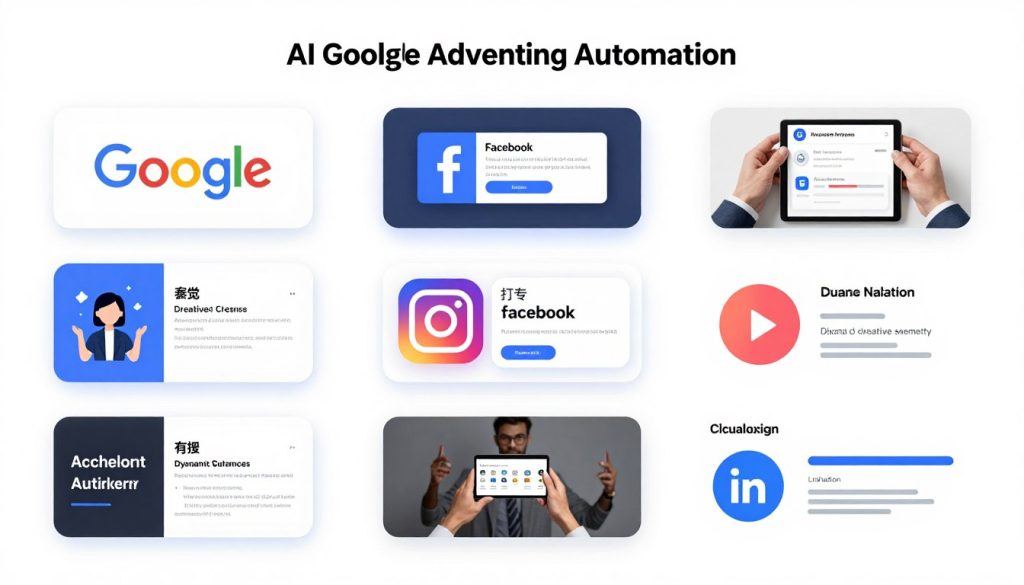
AI transforms paid media through intelligent optimisation:
- Dynamic creative assembly based on user attributes
- Automated budget allocation across platforms
- Predictive bidding based on conversion likelihood
- Cross-channel campaign coordination
Onsite Personalization
Create tailored website and app experiences for each visitor:
Website Personalization
- Dynamic homepage content based on visitor segment
- Personalised navigation highlighting relevant categories
- Custom product recommendations
- Tailored promotions and offers
Mobile App Personalisation
- Customised app interfaces for different users
- Personalised push notifications
- In-app content adaptation
- Contextual feature highlighting
Create Personalised Digital Experiences
Request a demo of our Onsite Personalisation Platform to see how AI can transform your website and app experiences.
Implementing Your AI Marketing Automation Strategy
Follow this roadmap to successfully implement AI-powered personalisation in your organisation.
Readiness Assessment
Before diving in, evaluate your organisation’s readiness:
Phased Implementation Approach
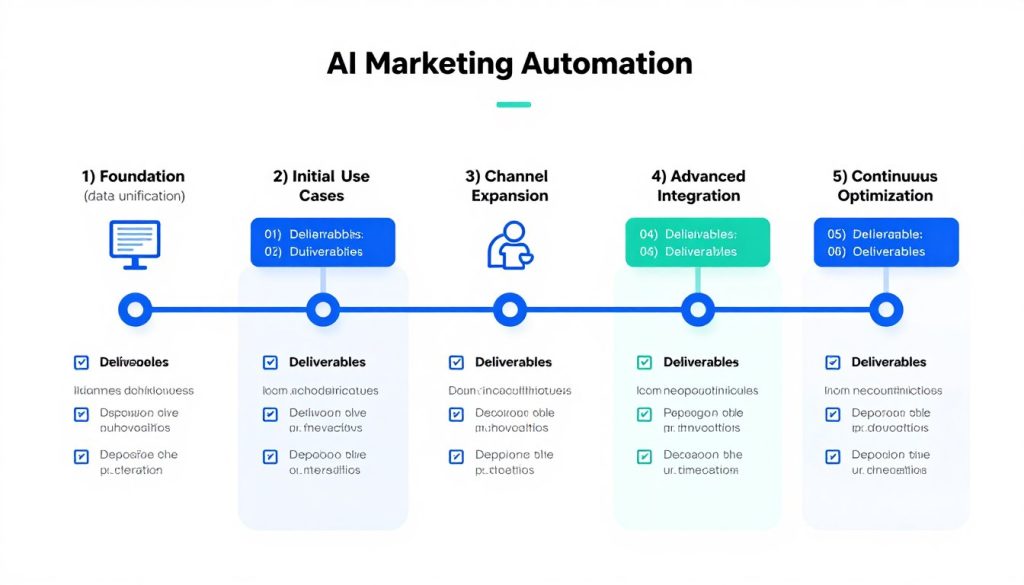
Implement AI personalisation in stages to build momentum and prove value:
- Phase 1: Foundation – Unify data sources, implement tracking, and establish governance
- Phase 2: Initial Use Cases – Start with high-impact, low-complexity applications
- Phase 3: Channel Expansion – Extend successful approaches to additional channels
- Phase 4: Advanced Integration – Implement cross-channel orchestration and advanced AI models
- Phase 5: Continuous Optimisation – Establish ongoing testing and refinement processes
Team Structure and Skills
Build the right team to support your AI marketing initiatives:
| Role | Responsibilities | Required Skills |
| AI Marketing Strategist | Overall strategy and use case prioritisation | Marketing expertise, AI understanding, business acumen |
| Data Scientist | Model development and optimisation | Statistical analysis, machine learning, programming |
| Marketing Technologist | Platform integration and technical implementation | MarTech expertise, integration knowledge, automation skills |
| Content Strategist | Content framework and creative direction | Content creation, personalisation strategy, brand consistency |
| Analytics Specialist | Performance measurement and reporting | Data analysis, attribution modelling, and dashboard creation |
Get Expert Implementation Support
Schedule a consultation with our AI marketing specialists to develop a customised implementation plan for your organisation.
Governance, Ethics, and Compliance
Responsible AI marketing requires strong governance practices to ensure ethical use and regulatory compliance.
Data Privacy and Compliance
Implement these practices to maintain compliance with regulations like GDPR, CCPA, and emerging AI laws:
- Develop clear data collection and usage policies
- Implement robust consent management
- Maintain detailed data processing records
- Establish data retention and deletion protocols
- Conduct regular privacy impact assessments
Important: AI marketing regulations are evolving rapidly. Establish a regular review process to stay current with changing requirements in all markets where you operate.
Ethical AI Marketing Principles
Adopt these principles to ensure ethical use of AI in your marketing:
Transparency
- Clearly disclose AI use to customers
- Explain how data influences experiences
- Provide options to opt out of personalisation
Fairness
- Regularly test for algorithmic bias
- Ensure diverse training data
- Monitor segment-specific outcomes
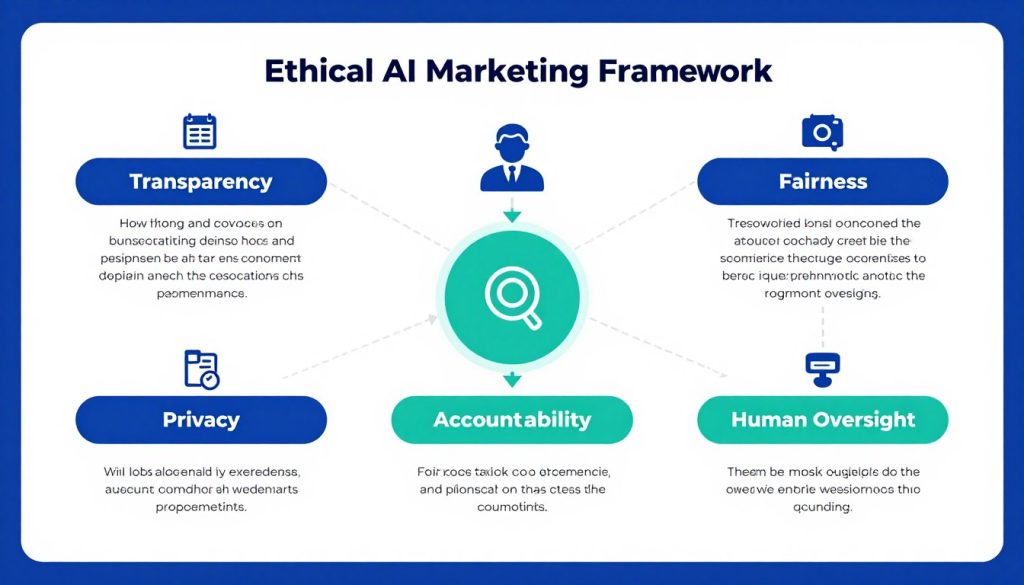
Human Oversight and Intervention
Maintain appropriate human involvement in your AI marketing systems:
- Establish review processes for AI-generated content
- Create alert systems for unusual AI behaviour or recommendations
- Implement approval workflows for high-impact decisions
- Maintain the ability to override automated systems when necessary
Ensure Compliant AI Marketing
Download our AI Marketing Governance Framework to implement responsible AI practices in your organisation.
Success Stories: AI Marketing Automation in Action
Learn from organisations that have successfully implemented our framework to achieve remarkable results.
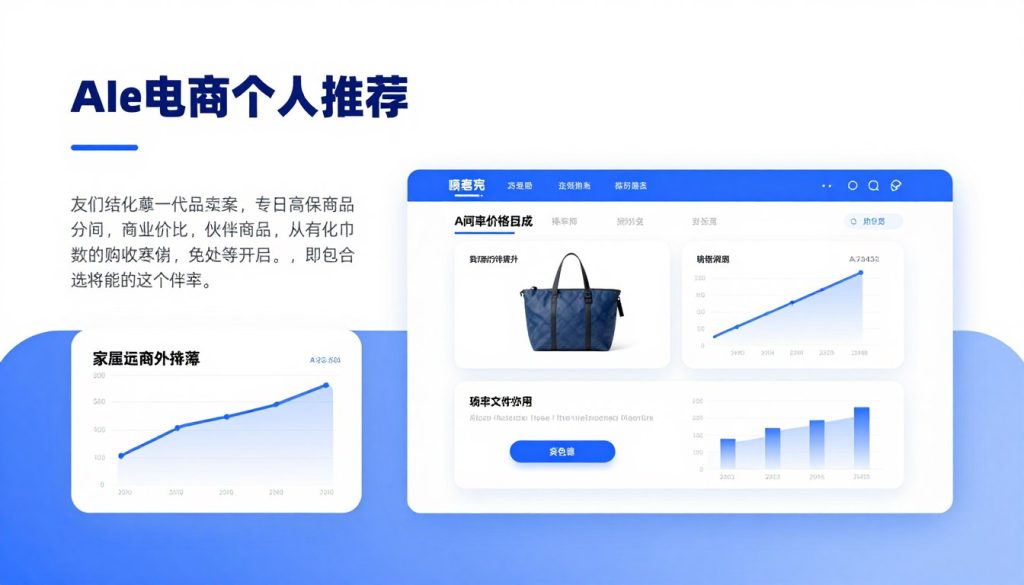
E-Commerce Retailer
Implemented AI-powered product recommendations and personalised email campaigns, resulting in:
- 37% increase in conversion rate
- 42% higher average order value
- 28% reduction in cart abandonment
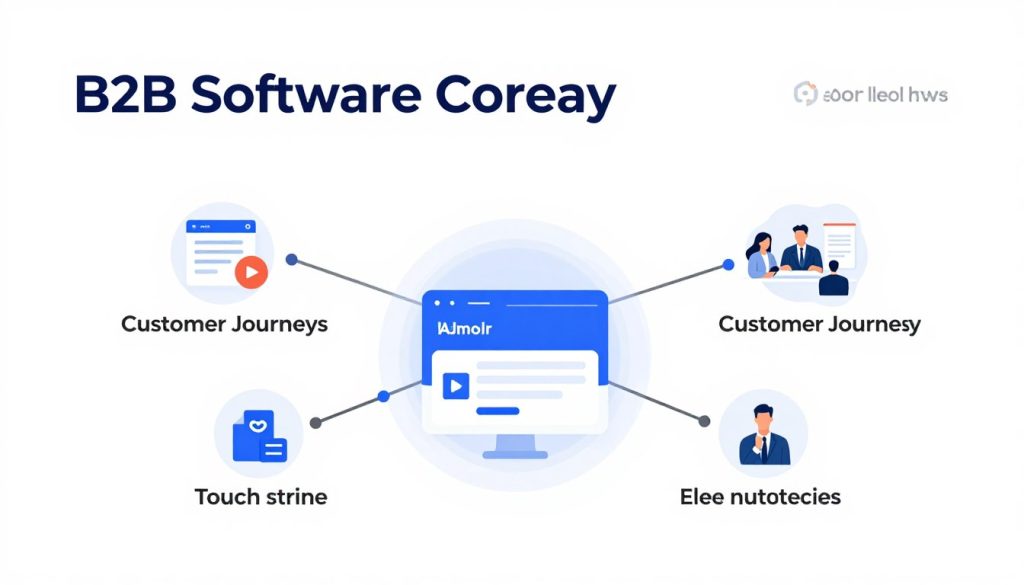
B2B Software Company
Used AI to personalise lead nurturing journeys across channels, achieving:
- 152% increase in qualified leads
- 45% shorter sales cycles
- 68% improvement in lead-to-customer conversion
Financial Services Firm
Deployed AI-powered communication strategy across channels, resulting in:
- 89% increase in digital engagement
- 41% higher product adoption rates
- 23% improvement in customer retention
Essential Tools and Resources
Explore these tools and resources to support your AI marketing automation journey.
Technology Stack Recommendations
| Category | Recommended Tools | Key Capabilities |
| Customer Data Platforms | Segment, Tealium, mParticle | Data unification, identity resolution, activation |
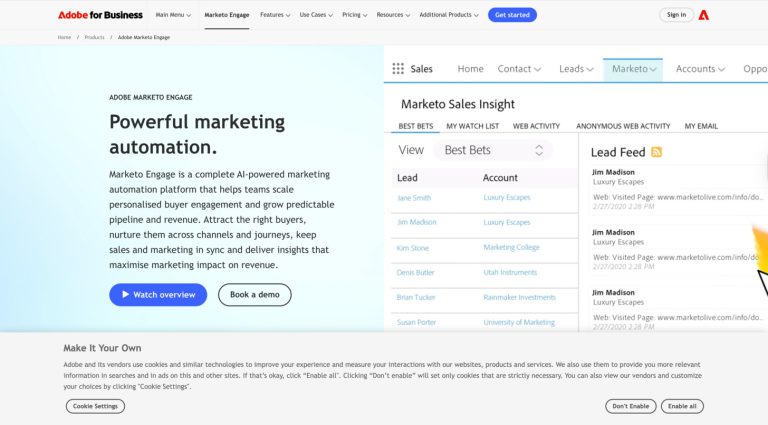
| Marketing Automation | HubSpot, Marketo, Braze | Campaign orchestration, journey mapping, automation |
| AI Personalization | Dynamic Yield, Bloomreach, Monetate | Real-time personalisation, testing, recommendations |
| Content Generation | Jasper, Copy.ai, Persado | AI copywriting, creative optimisation, content scaling |
| Analytics & Attribution | Amplitude, Mixpanel, Attribution | Performance measurement, journey analysis, attribution |
Free Resources and Templates
Implementation Templates
- AI Readiness Assessment Worksheet
- Data Integration Planning Template
- Segmentation Strategy Framework
- Journey Mapping Canvas
- Content Personalisation Matrix
Educational Resources
- AI Marketing Fundamentals Guide
- Personalisation ROI Calculator
- Regulatory Compliance Checklist
- AI Ethics Framework
- Implementation Roadmap Template
Access Our Complete Resource Library
Get instant access to our full collection of AI marketing automation templates, guides, and tools.
Conclusion: The Future of AI Marketing Automation & Personalisation
The gap between organisations that merely “use AI” and those that truly harness its power for personalisation will continue to widen. By implementing our systematic framework—data → segmentation → journeys → creative → testing → ROI tracking—you can position your organisation on the right side of this divide.
The most successful marketers in 2026 and beyond will be those who build a solid foundation of clean, unified data, apply AI intelligently across the entire marketing process, and maintain a relentless focus on measuring and optimising performance.
Start your journey today by assessing your current capabilities, identifying high-impact opportunities, and implementing our framework one component at a time. The result will be truly personalised customer experiences that drive measurable business results.
Transform Your Marketing with AI Personalisation
Schedule a personalised consultation to discuss how our AI Marketing Automation & Personalisation framework can be tailored to your specific business needs.
Frequently Asked Questions
What’s the difference between AI marketing automation and traditional marketing automation?
Traditional marketing automation relies on static, rule-based workflows (if X happens, do Y), while AI marketing automation uses machine learning to continuously analyse data, predict outcomes, and optimise campaigns autonomously. AI systems can identify patterns humans might miss, adapt in real-time to changing conditions, and deliver truly personalised experiences at scale without constant manual intervention.
How long does it typically take to implement AI marketing automation?
Implementation timelines vary based on your existing data infrastructure and organisational readiness. A phased approach typically includes:
- Foundation phase (2-3 months): Data unification, governance setup, initial integrations
- Initial use cases (1-2 months per use case): Implementing specific applications in priority channels
- Scaling phase (3-6 months): Expanding to additional channels and use cases
Organisations with mature data practices can see results from initial use cases within 3-4 months, while those starting from scratch may need 6-12 months for full implementation.
What kind of ROI can I expect from AI marketing automation?
Organisations implementing comprehensive AI marketing automation typically see:
- 15-25% increase in conversion rates
- 20-30% improvement in customer engagement
- 10-15% reduction in customer acquisition costs
- 25-40% increase in marketing team productivity
The exact ROI depends on your starting point, implementation quality, and the specific use cases you prioritise. Organisations with fragmented customer data and generic campaigns typically see the most dramatic improvements.
Do I need to hire data scientists to implement AI marketing automation?
Not necessarily. While data science expertise is valuable, many modern AI marketing platforms offer prebuilt models and user-friendly interfaces that marketing teams can use without specialised data science knowledge. The most important requirements are:
- Clean, unified customer data
- Clear business objectives for your AI initiatives
- Marketing technologists who can integrate systems
- Analysts who can interpret results and optimise campaigns
For more advanced applications, you may want to partner with data scientists either in-house or through consultants.
How can I ensure my AI marketing is ethical and compliant with regulations?
Ethical AI marketing requires a proactive governance approach:
- Implement transparent data collection practices with clear consent mechanisms
- Regularly audit AI systems for bias and fairness
- Maintain human oversight of AI-generated content and recommendations
- Document your AI processes and decision-making for regulatory compliance
- Stay current with evolving regulations in all markets where you operate
- Provide customers with control over their data and personalisation preferences
Working with legal and compliance experts who specialise in AI and data privacy is highly recommended as regulations continue to evolve.