AI vs Human Writers: When to Use Each for Your Content

Content managers now face a critical decision: when to leverage artificial intelligence and when to rely on human writers. This isn’t simply about choosing one over the other—it’s about strategically deploying each option to maximise quality, efficiency, and results. In this guide, we’ll explore the unique strengths of both AI and human writers, providing you with actionable frameworks to optimise your content strategy.
Understanding the Current Content Creation Landscape
The debate between AI and human writers has intensified as tools like ChatGPT, Jasper, and Claude have demonstrated impressive capabilities. According to recent industry surveys, over 65% of marketing teams now incorporate some form of AI in their content creation process. However, this shift hasn’t eliminated the need for human writers—instead, it has redefined their role and value.
As AI writing tools become more sophisticated, the question isn’t whether they’ll replace human writers entirely, but rather how these technologies can work together to produce better content more efficiently. Understanding the strengths and limitations of each approach is essential for developing an effective content strategy.
AI Writers vs Human Writers: A Comprehensive Comparison
Before deciding when to use each approach, it’s essential to understand its fundamental differences. The following comparison highlights the key strengths and limitations of both AI and human writers.
| Criteria | AI Writers | Human Writers |
| Speed & Efficiency | Can generate thousands of words in seconds; ideal for high-volume content needs | Slower production pace; typically 500-2000 words per day, depending on complexity |
| Cost | Lower cost per word; subscription models typically $29-$99/month for unlimited content | Higher cost; professional writers charge $0.10-$1.00+ per word depending on expertise |
| Creativity & Originality | Limited to patterns in training data; struggles with truly novel ideas | Capable of original thinking, unique perspectives, and creative connections |
| Emotional Intelligence | Can mimic emotional language but lacks a genuine understanding of human emotions. | Naturally understands emotional nuances and can create authentic emotional connections. |
| Research Capabilities | Limited to the knowledge cutoff date; may present inaccurate information confidently. | Can conduct original research, verify facts, and integrate current information |
| Brand Voice Consistency | Once properly prompted, maintains a consistent tone and style across all content. | May vary slightly between writers; requires style guides and editing |
| SEO Optimization | Excellent at incorporating keywords and following SEO formulas | May require additional training in SEO best practices |
| Adaptability | Requires new prompts to adapt to changing requirements | Can quickly pivot and adjust to new information or feedback |

When AI Writers Excel: Optimal Use Cases
AI writing tools have revolutionised certain aspects of content creation. Here are the scenarios where AI writers typically outperform their human counterparts:
Best Uses for AI Writers
- Data-Driven Content: Reports, analytics summaries, and financial updates where factual presentation is key
- Product Descriptions: Creating consistent descriptions across extensive inventories
- SEO Metadata: Generating meta titles, descriptions, and alt text at scale
- First Drafts: Creating initial outlines and rough drafts to be refined by humans
- Repetitive Content: Email templates, social media captions, and routine updates
- Content Variations: A/B testing different headlines or approaches
- Technical Documentation: Standard operating procedures and basic how-to guides

Case Study: E-commerce Product Description Scaling
An online retailer with over 10,000 products implemented AI writers to generate consistent product descriptions. The results were impressive:
The company completed the task in two weeks that would have taken their team nearly six months. Although a human editor still reviewed the final output, the AI-generated descriptions maintained a consistent quality and brand voice across the entire catalogue, resulting in a 23% increase in product page conversion rates.
When Human Writers Are Irreplaceable: Critical Scenarios
Despite AI’s impressive capabilities, human writers continue to be essential for many content types. Here are situations where the human touch makes all the difference:
Best Uses for Human Writers
- Thought Leadership: Original insights and industry perspectives that establish authority
- Storytelling: Narrative-driven content that creates emotional connections
- Brand Voice Development: Establishing and refining a unique company voice
- Complex Topics: Nuanced subjects requiring deep expertise and careful explanation
- Sensitive Content: Topics requiring cultural sensitivity or ethical considerations
- Creative Campaigns: Innovative marketing concepts and creative copywriting
- High-Stakes Content: Legal content, crisis communications, and investor relations

Case Study: Healthcare Content Initiative
A healthcare provider attempted to use AI for patient education materials but quickly discovered limitations. They switched to specialised human medical writers with the following results:
The human-written content not only ensured complete medical accuracy but also demonstrated empathy and cultural sensitivity that AI couldn’t match. Patient understanding improved by 42%, and the materials received praise from regulatory reviewers for their clarity and compliance with regulations.
Assess Your Content Needs
Are you unsure whether your specific content project requires AI efficiency or human creativity? Please take our quick assessment to receive personalised recommendations for your content strategy.
The Optimal Approach: Strategic Integration of AI and Human Writers
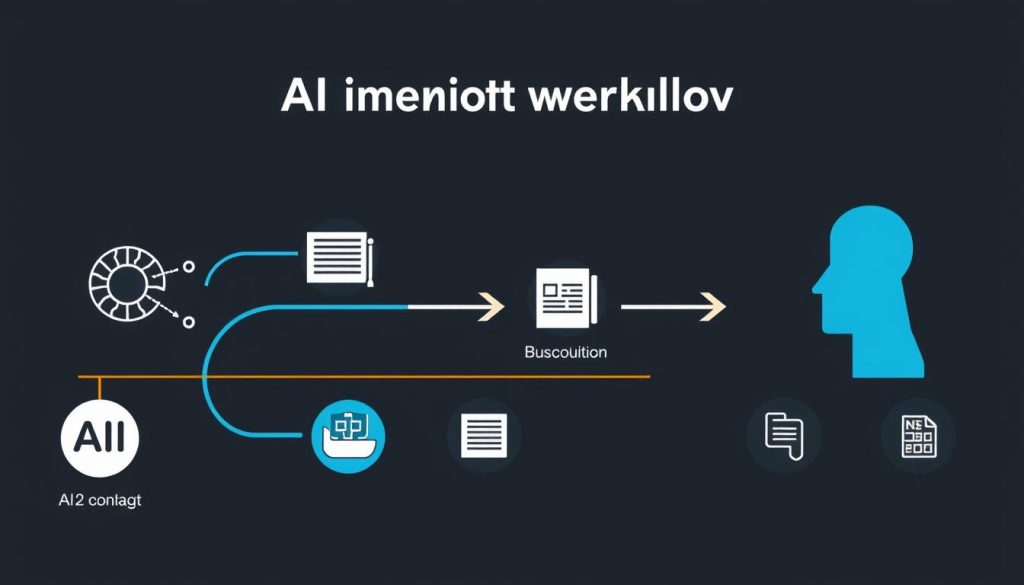
Rather than viewing AI and human writers as competing options, forward-thinking content managers are developing hybrid approaches that leverage the strengths of both. Here’s how to implement an effective collaborative strategy:
The Content Creation Workflow: AI + Human Collaboration
Phase 1: AI Foundation
- Research aggregation and synthesis
- Initial content outline generation
- First draft creation based on parameters
- SEO keyword integration
- Basic formatting and structure
Phase 2: Human Enhancement
- Fact-checking and verification
- Addition of original insights
- Emotional and brand voice refinement
- Storytelling elements integration
- Cultural and contextual nuance
Phase 3: Collaborative Finalisation
- AI-assisted editing for grammar and clarity
- Human final approval and quality check
- AI-powered SEO optimisation verification
- Human creativity for headlines and hooks
- Performance analysis for future improvement

Guidelines for Effective AI-Human Content Collaboration
“The most successful content teams don’t ask ‘AI or human?’ but rather ‘How can AI enhance our human writers’ capabilities?’ This mindset shift is transforming content operations across industries.”
Strategic Planning
- Audit content types and categorise by complexity
- Identify which stages benefit most from AI assistance
- Establish clear quality standards for both AI and human work
- Create detailed prompts and templates for consistent AI output
- Develop content briefs that guide both AI and human contributors
Team Integration
- Train writers on effective AI tool utilisation
- Position AI as an assistant, not a replacement
- Establish clear roles for AI vs. human contributions
- Create feedback loops to improve AI prompts over time
- Celebrate and reward human creativity and expertise
Quality Control
- Implement human review for all AI-generated content
- Use AI tools to check human content for consistency
- Establish fact-checking protocols for all content
- Regularly audit content performance by creation method
- Maintain brand voice guidelines for both AI and humans
Real-World Success: Case Studies in AI-Human Content Collaboration
Financial Services Blog Transformation
A mid-sized financial services firm implemented a hybrid approach for its educational blog. AI tools generated data-heavy sections and first drafts, while human financial writers added expertise, compliance checks, and relatable examples. The results were impressive:
- Content production increased by 78% without additional staff
- Time to publication decreased from 14 days to 5 days
- Organic traffic increased by 43% within six months
- Reader engagement metrics improved by 27%
The key to success was clearly defining which aspects of content creation would be handled by AI versus humans, with humans always having final editorial control.

SaaS Technical Documentation Efficiency
A software-as-a-service company faced challenges keeping its technical documentation updated across multiple product versions. They implemented a hybrid approach where:
- AI-generated standardised sections and code examples
- Technical writers focused on conceptual explanations and use cases
- Engineers reviewed for technical accuracy
- AI tools maintained consistency across documentation
This approach reduced documentation time by 62% while improving accuracy and completeness scores in user feedback surveys. The company now maintains comprehensive documentation across five product versions with the same-sized documentation team.
The Future of AI and Human Writers: Evolving Relationship
The relationship between AI and human writers is evolving rapidly. Here’s what content managers should anticipate in the coming years:
Near Future (1-2 Years)
- More specialised AI writing tools for specific industries
- Improved fact-checking capabilities in AI systems
- Better integration between AI tools and content management systems
- Human writers developing specialised AI prompting skills
- Increased transparency about AI-generated content
Medium Term (3-5 Years)
- AI is becoming more creative within defined parameters
- Human writers focus more on strategy and oversight
- More sophisticated content personalisation at scale
- Regulatory frameworks for AI content disclosure
- New job roles specialising in AI-human content collaboration
Long Term (5+ Years)
- AI is potentially developing more original thinking capabilities
- Human writers are becoming more like content directors
- Complete content ecosystems with AI and human components
- New metrics for evaluating content effectiveness
- Redefinition of creativity in the age of advanced AI

Expert Insight: The Evolution of Content Creation
“We’re moving toward a future where the line between AI and human contribution becomes increasingly blurred. The most successful content teams will be those that develop sophisticated orchestration of these complementary capabilities, with humans directing AI tools to handle routine tasks while focusing their own efforts on the aspects of content that require human creativity, empathy, and strategic thinking.”
– Dr Michael Chen, Professor of Digital Communications, Stanford University
Actionable Framework: Determining When to Use AI vs Human Writers
To help you make practical decisions about when to use AI versus human writers, we’ve developed this decision framework based on key content characteristics:
| Content Characteristic | AI Writers | Human Writers | Hybrid Approach |
| Volume Needed | High volume (100+ pieces) | Low volume (1-10 pieces) | Medium volume (10-100 pieces) |
| Creativity Required | Low (formulaic content) | High (original concepts) | Medium (structured with creative elements) |
| Technical Complexity | Low to medium | Very high (expert topics) | High (technical with accessibility needs) |
| Emotional Connection | Minimal importance | Critical importance | Moderate importance |
| Turnaround Time | Immediate (hours) | Extended (weeks) | Quick (days) |
| Budget Constraints | Severe limitations | Flexible budget | Moderate constraints |
| Brand Voice Importance | Standard/generic acceptable | Distinctive voice critical | Consistent voice important |
| Regulatory Oversight | Minimal regulations | Strict regulatory environment | Moderate regulations with review |

Conclusion: Embracing the Best of Both Worlds
The debate between AI and human writers isn’t about choosing one over the other—it’s about strategically leveraging each for what they do best. As we’ve explored throughout this article, AI excels at efficiency, consistency, and handling data-driven content. At the same time, human writers bring creativity, emotional intelligence, and strategic thinking that AI cannot replicate.
The most successful content strategies in 2024 and beyond will be those that thoughtfully integrate both approaches. By utilising AI to handle routine tasks and initial drafts, human writers can concentrate their talents on incorporating the creative, emotional, and strategic elements that genuinely resonate with audiences.
As you develop your content strategy, remember that the goal isn’t to replace humans with AI or to resist technological advancement. Instead, focus on creating a collaborative ecosystem where each contributor—whether human or AI—is utilised for their unique strengths. This balanced approach will not only improve efficiency and reduce costs, but also result in higher-quality content that truly resonates with your audience.

Transform Your Content Strategy
Ready to optimise your content creation process with the perfect balance of AI efficiency and human creativity? Our team of content strategists can help you develop a customised approach that maximises results while minimising costs.
Frequently Asked Questions
Will AI completely replace human writers in the future?
While AI writing capabilities continue to advance rapidly, it’s unlikely that AI will completely replace human writers. AI lacks the genuine creativity, emotional intelligence, and lived experience that human writers bring to the content creation process. Instead, we’re moving toward a collaborative future where AI handles routine tasks and assists human writers, enabling them to focus on higher-value, creative, and strategic work.
How can I ensure my AI-generated content doesn’t sound robotic?
To ensure AI-generated content sounds natural, implement human editing as part of your workflow, use sophisticated prompts that specify a conversational tone, and consider using AI primarily for first drafts that humans then refine. Additionally, newer AI models are increasingly better at mimicking natural language patterns when properly prompted.
Does Google penalise AI-generated content?
Google has stated that they don’t penalise AI-generated content specifically, but relatively low-quality content, regardless of how it’s created. Their focus remains on whether content provides value to users. High-quality AI content that’s factually accurate, helpful, and properly edited can perform well in search results, especially when enhanced with human expertise and original insights.